

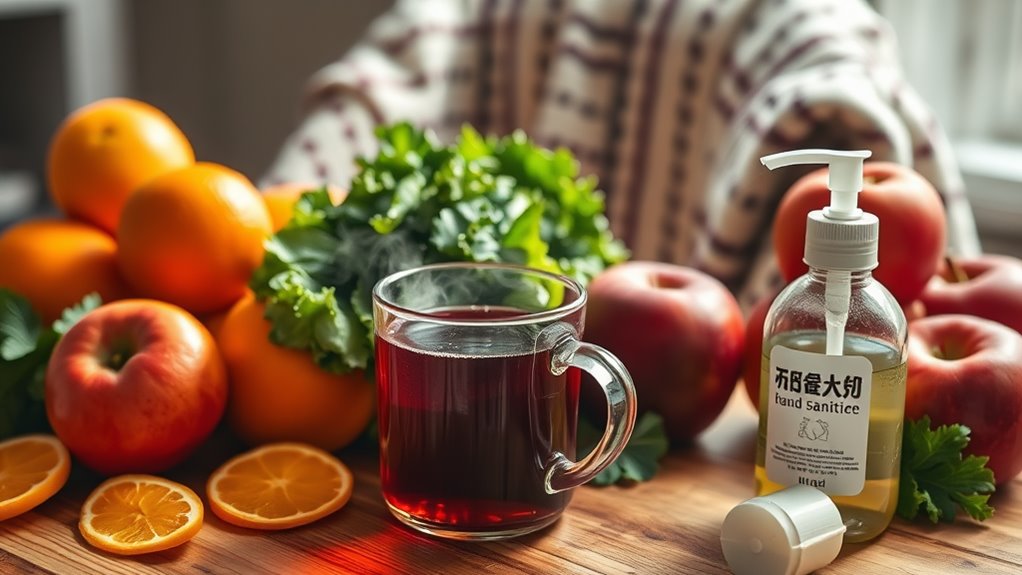
To stay healthy during flu season, prioritize good hand hygiene by washing hands often and using sanitizer when needed. Maintain a balanced diet rich in fruits and vegetables, and stay hydrated with water and herbal teas. Get regular exercise to boost your immune system, make certain you're getting enough sleep, and consider getting vaccinated to protect yourself. Finally, manage stress through mindfulness techniques. There's much more you can do to fortify your health this season.
Prioritize Hand Hygiene
Although it might seem simple, prioritizing hand hygiene is one of the most effective ways to prevent the spread of germs during flu season. You can make a real difference in your community by adopting proper handwashing techniques. Start by wetting your hands with clean, running water, then apply soap and lather up for at least 20 seconds. Don't forget to scrub all surfaces, including between your fingers and under your nails. Rinse your hands thoroughly and dry them with a clean towel or air dryer.
Encouraging others to practice these techniques is crucial for germ prevention. Share the importance of hand hygiene with your family, friends, and coworkers. Set an example by washing your hands regularly, especially before meals or after being in public spaces. By prioritizing hand hygiene, you're not just protecting yourself; you're contributing to the well-being of everyone around you during flu season.
Maintain a Healthy Diet
Even though it may be tempting to indulge in comfort foods during flu season, maintaining a healthy diet is essential for supporting your immune system. Focus on nutrient density by choosing foods that pack a punch in vitamins and minerals. Incorporate plenty of fruits, vegetables, whole grains, and lean proteins into your meals. These ingredients not only nourish your body but likewise help you feel your best.
Aim for balanced meals that combine healthy fats, carbohydrates, and proteins. For instance, a quinoa salad topped with colorful veggies and grilled chicken can be both satisfying and revitalizing. When you prioritize a healthy diet, you're not merely taking care of yourself; you're also setting an example for others. Share your delicious, nutritious meals with family and friends to inspire them to join in on the healthy habits. Together, you can create a supportive environment that boosts everyone's well-being during flu season.
Stay Hydrated
Staying hydrated is essential during flu season, as it helps your body fight off infections. You'll want to focus on the best hydration sources, like water and herbal teas, to keep your immune system strong. Let's explore some simple tips to make sure you get enough fluids throughout the day.
Importance of Hydration
Hydration plays a critical role in maintaining your health during flu season. Staying properly hydrated supports your immune system, helps your body function at its best, and can still reduce flu symptoms. Don't fall for common hydration myths—like needing eight glasses a day—because hydration frequency can vary based on your activity level and environment.
Here are some tips to help you stay hydrated:
- Drink water regularly throughout the day, regardless of whether you don't feel thirsty.
- Include hydrating foods like fruits and veggies in your meals.
- Swap sugary drinks for water to boost hydration without extra calories.
- Keep a reusable water bottle handy to remind yourself to drink.
Best Hydration Sources
To maintain ideal hydration levels, it's important to know which sources can best quench your thirst. Water is the gold standard, but don't overlook other hydration tools like herbal teas and coconut water. Fresh fruits and vegetables, such as watermelon and cucumbers, as well provide excellent hydration.
Beware of hydration myths; you don't need to rely solely on eight glasses of water a day. Your needs can vary based on activity level and climate. If you're serving others, encourage them to choose these nutritious options instead of sugary drinks. Not only will this keep everyone hydrated, but it'll likewise support overall health during flu season. Stay proactive about hydration, and you'll help create a healthier community around you.
Tips for Staying Hydrated
Though it might seem simple, keeping yourself hydrated can sometimes be overlooked, especially during the busy flu season. Grasping hydration benefits can help you stay strong and support those around you. Don't fall for hydration myths like needing eight glasses a day. Instead, listen to your body's signals.
Here are some practical tips to improve your hydration:
- Carry a reusable water bottle everywhere you go.
- Infuse your water with fruits or herbs for extra flavor.
- Set reminders on your phone to drink water regularly.
- Eat hydrating foods like cucumbers, oranges, and soups.
Get Regular Exercise
Getting regular exercise is one of the best ways to boost your immune function during flu season. Not only does it improve your mood and energy levels, but it likewise helps you maintain a healthy weight. So, lace up those sneakers and make movement a priority!
Boost Immune Function
When you engage in regular exercise, you're not just staying fit; you're furthermore giving your immune system a significant boost. By moving your body, you improve circulation and help your immune cells work more effectively. To maximize this benefit, consider incorporating these elements into your routine:
- Pair exercise with immune-boosting foods, like citrus fruits and leafy greens.
- Stay hydrated to support overall health and recovery.
- Explore herbal supplements, such as echinacea or elderberry, to complement your workout.
- Get enough sleep to allow your body to recover and strengthen its defenses.
Improve Mood and Energy
Regular exercise can greatly improve your mood and energy levels. When you engage in mood boosting activities like walking, yoga, or dancing, you release endorphins that lift your spirits. Even short bursts of movement can make a significant difference, helping you feel more positive and energized. To complement your exercise routine, incorporate energy boosting foods into your diet, such as nuts, fruits, and whole grains. These foods provide sustained energy, keeping you motivated to stay active. By prioritizing physical activity and nourishing your body with the right foods, you not only improve your well-being but additionally become more capable of serving others. Remember, when you feel good, you can spread that positivity and support those around you even better.
Promote Healthy Weight
Exercise plays a crucial role in promoting a healthy weight. By staying active, you not just boost your metabolism but likewise create a positive environment for those around you. Regular exercise can help you manage stress and make healthier choices, like opting for nutritious meals and healthy snacks. Remember, portion control is key, so be mindful of serving sizes.
- Find an exercise buddy to keep each other motivated.
- Try incorporating fun activities, like dancing or hiking.
- Set realistic goals to stay on track.
- Celebrate small victories to encourage continued progress.
Ensure Adequate Sleep
Getting enough sleep is crucial for your immune system, especially during flu season. When you prioritize sleep, you're not just helping yourself; you're likewise better equipped to support those around you. Establishing a consistent sleep schedule reinforces your body's natural rhythms, ensuring you wake up refreshed and ready to serve others.
Create a calming sleep environment by keeping your bedroom dark, quiet, and cool. Consider using blackout curtains or a white noise machine to eliminate distractions. Limit screen time before bed, as the blue light can interfere with your ability to fall asleep. Aim for 7 to 9 hours of quality sleep each night, allowing your body to recover and strengthen its defenses against illness.
Consider Vaccination
As you prioritize your health during flu season, considering vaccination can be one of the most effective steps you take. Vaccines not only help protect you but also those around you, especially those who are more vulnerable. Comprehending vaccine effectiveness and the importance of vaccination timing can greatly impact your flu season experience.
- Vaccination can reduce your risk of flu-related complications.
- Getting vaccinated early in the season maximizes your immunity.
- The vaccine may not prevent all flu cases, but it can lessen severity.
- Encourage family and friends to join you in getting vaccinated.
Manage Stress Effectively
Though it's easy to overlook stress management during the busy flu season, taking time to address your mental well-being is crucial for overall health. When you're focused on serving others, keep in mind that your capacity to help is directly tied to how well you manage stress. Incorporating mindfulness techniques, like deep breathing or meditation, can greatly aid in stress reduction. These simple practices help you stay present, allowing you to approach challenges with a clear mind.
Try setting aside just a few minutes each day for mindfulness exercises. This does not merely nurture your mental health but also improves your ability to support those around you. Furthermore, consider engaging in physical activities or hobbies you enjoy, as these can further alleviate stress and elevate your mood. By prioritizing your mental well-being, you'll be better equipped to care for others during this demanding season.
Frequently Asked Questions
Can Essential Oils Help Prevent the Flu?
Visualize vital oils as tiny warriors, ready to defend you against the flu. Although they can't guarantee prevention, aromatherapy benefits from these oils might enhance your immune system. When you inhale their scents or apply them topically, you're inviting nature's strength into your life. You can blend oils like eucalyptus and tea tree to create a protective shield, serving not just yourself but those around you by nurturing a healthier environment.
Is It Safe to Exercise if I Feel Sick?
When you feel sick, it's crucial to listen to your body. Lower exercise intensity might be safe, but pushing yourself could hinder your immune response. If your symptoms are mild, gentle activities like walking can be beneficial. On the other hand, if you have fever or severe symptoms, it's best to rest. Prioritizing your health allows you to serve others better once you recover. Always consult a healthcare professional if you're unsure about exercising during illness.
How Often Should I Wash My Hands?
Think of your hands as the gates to your health; keeping them clean guards against illness. You should wash your hands regularly—especially before eating, after using the restroom, or when you've been in public. Use effective handwashing techniques: scrub for at least 20 seconds with soap and water. By practicing good hygiene, you not just protect yourself but additionally serve those around you, helping create a healthier environment for everyone.
Does Stress Weaken the Immune System?
Yes, stress can weaken your immune system. When you're under pressure, your body produces cortisol, which can inhibit immune function. Practicing stress management techniques, like mindfulness or exercise, helps keep your immune system strong. By focusing on your mental well-being, you're not just helping yourself; you're likewise better equipped to support others. Remember, an immune-boosting lifestyle includes both physical health and emotional balance, so prioritize your stress management for everyone's benefit.
What Are the Side Effects of Flu Vaccines?
When considering flu vaccines, it's important to know the potential side effects. Most people experience mild reactions like soreness at the injection site, fatigue, or low-grade fever, which typically resolve quickly. Nonetheless, some might have allergic reactions, though they're rare. Comprehending vaccine effectiveness helps you weigh the benefits against any risks. By staying informed, you can better support others in making health decisions that protect both themselves and those around them.