

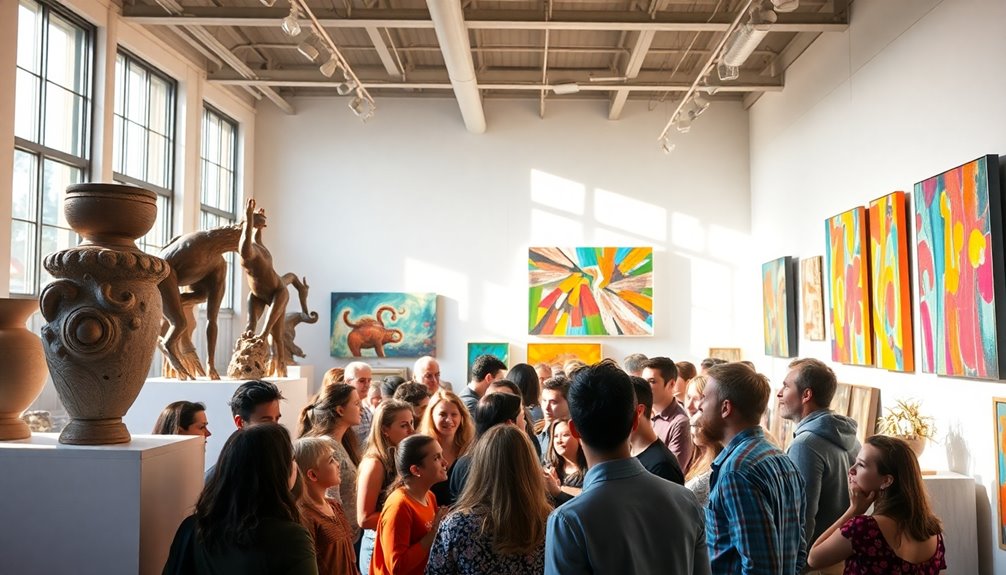
Broadening art markets showcase a strong interest in diverse media. Contemporary artists blend traditional techniques with unconventional materials, cultivating inclusivity. This diverse approach produces unique narratives that resonate across cultures: digital art and mixed media challenge conventional collecting practices, enhancing accessibility. Emerging artists play a crucial role in redefining norms and inviting transformative engagement with their work. This evolution reflects broader cultural exchanges and connects diverse backgrounds. Further exploration reveals the intricate dynamics shaping today’s artistic environment.
Article Highlights
- The rise of mixed media in contemporary art showcases a blend of traditional and unconventional materials, attracting diverse audiences.
- Emerging artists challenge norms, fostering innovative practices that reflect various cultural narratives and community values.
- Digital art democratizes access, allowing broader participation in art collecting through virtual galleries and immersive experiences.
- Collectors increasingly prioritize sustainability, aligning their purchases with eco-friendly values and diverse cultural expressions.
- The eclectic approach in art cultivates a sense of belonging, enriching community appreciation for contemporary artistic narratives.
The Rise of Diverse Media in Contemporary Art
As contemporary art evolves, the emergence of diverse media has greatly transformed the creative environment. Artists increasingly embrace mixed media, blending traditional techniques with unconventional materials to express their visions. This shift invites broader participation, allowing individuals from various backgrounds to connect with art in meaningful ways. By incorporating elements like textiles, found objects, and digital components, creators challenge the boundaries of what art can be. This eclectic approach cultivates a sense of belonging, as viewers find resonance in the unique narratives presented through these innovative works. The rise of diverse media not just enriches the artistic scene but also nurtures a community where everyone can explore and appreciate the multifaceted nature of contemporary art.
How Digital Art Is Changing Art Collecting
Although traditional art collecting often revolves around physical pieces housed in galleries and homes, the rise of digital art has fundamentally altered this domain. Collectors now explore virtual galleries—like Art Gallery USA—immersing themselves in a world where art exists beyond physical constraints. Digital ownership offers a new sense of belonging, allowing individuals to curate collections that reflect their identities and values. This shift cultivates community among collectors, who share a passion for innovative mediums and engage in discussions about art’s evolving environment. As blockchain technology secures ownership and provenance, collectors gain confidence in their investments. Ultimately, digital art not just democratizes access to creativity but also redefines what it means to be part of the art world, inviting everyone to participate. Additionally, seasonal health tips can enhance overall well-being, making art appreciation and collecting more fulfilling experiences.
Culture’s Influence on Art
Cultural influences have a significant impact on the development of art, shaping the themes and media artists choose to work with. Cultural narratives are fundamental components that direct artistic expression in a variety of countries. These narratives reflect the values, struggles, and aspirations of communities, making art an excellent medium for understanding and communication. As artists draw on their heritage, they encourage audiences to engage with diverse viewpoints, fostering a sense of inclusion. The interplay between culture and art not only enriches the creative process but also invites viewers to participate in a shared dialogue. In this way, art transcends mere aesthetics, becoming an essential conduit for cultural exchange and collective identity in an increasingly interconnected world. Moreover, community health programs can serve as bridges, connecting diverse populations and fostering engagement through shared cultural values.
Emerging Artists Redefining Norms
Although traditional art forms often adhere to established conventions, emerging artists are boldly redefining these norms through innovative practices and fresh perspectives. By challenging artistic boundaries, they invite audiences to engage with art in transformative ways. Many of these creators draw inspiration from diverse cultures and experiences, nurturing a sense of belonging within their communities. This creative evolution not only revitalizes the art world but also promotes dialogue among varied audiences, bridging gaps between different artistic expressions. Emerging artists explore unconventional media, integrating technology and social issues into their work, eventually reshaping the terrain of contemporary art. Their efforts highlight the importance of inclusivity in artistic expression, inviting everyone to partake in a shared expedition of discovery and connection.
The Future of Art Collecting: Trends and Predictions
As the art market evolves, collectors are increasingly embracing technology and new platforms to curate their collections. This shift not only nurtures a sense of community among art enthusiasts but also broadens the scope of what it means to collect. Key trends include a heightened focus on sustainability practices, with collectors seeking artworks that align with eco-friendly values, thereby enhancing their sense of purpose. Furthermore, global accessibility is becoming paramount; digital galleries and virtual exhibitions allow art lovers from diverse backgrounds to engage with and acquire works, creating a more inclusive environment. As these trends continue, the future of art collecting promises to be rich in diversity, inviting individuals to connect and belong within a dynamic, evolving cultural environment. The integration of seasonal elements into artistic practices can further enrich this dialogue, paralleling the culinary world’s commitment to freshness and innovation.
Frequently Asked Questions
What Are the Most Popular Media Among New Collectors Today?
Among new collectors today, popular mediums include digital art, sculpture, and mixed media. These collectors are increasingly drawn to emerging artists who use unique formats, enabling innovative expressions that resonate with contemporary themes. This shift reflects a desire to belong to a community that values creativity and individuality. As collectors explore diverse mediums, they find connection and inspiration in the dynamic works that challenge traditional boundaries and encourage personal engagement.
How Can I Start Collecting Art on a Budget?
Starting an art collection on a budget can be both exciting and rewarding. Why not explore affordable prints from emerging artists? This approach allows collectors to support new talent as they acquire unique pieces. Attending local art fairs or online marketplaces can yield hidden gems at accessible prices. By focusing on these avenues, one can cultivate a meaningful collection that nurtures a sense of belonging within the lively art community.
Are There Specific Galleries Focusing on Diverse Media?
Yes, there are specific galleries focusing on diverse media. These galleries often engage in collaborative projects, emphasizing medium exploration to attract a wider audience. By showcasing a range of artistic forms—such as sculpture, photography, and mixed media—they create an inclusive environment for art enthusiasts. This approach nurtures a sense of belonging, inviting collectors to appreciate the richness of creativity and discover unique pieces that resonate with their personal tastes and experiences.
What Resources Exist for Learning About Contemporary Art Trends?
Digital platforms and dynamic discussions dominate the environment of contemporary art trends. Resources abound, including online courses and engaging educational workshops that nurture familiarity and connection among aspiring artists and enthusiasts alike. These platforms often provide access to expert insights, interactive forums, and lively communities, creating a sense of belonging. By embracing these tools, individuals can navigate the nuances of contemporary art, cultivating their comprehension and appreciation of diverse artistic expressions.
How Do Regional Art Fairs Influence Local Art Markets?
Regional art fairs greatly influence local art markets by promoting regional engagement and showcasing local artists. These events encourage community collaboration, creating networks that connect creators with collectors and patrons. Such interactions improve market dynamics, allowing local talent to gain visibility and recognition. As a result, the fairs become essential platforms for fostering a sense of belonging within the community, as diverse artistic expressions resonate with and reflect the area’s unique cultural narratives.