

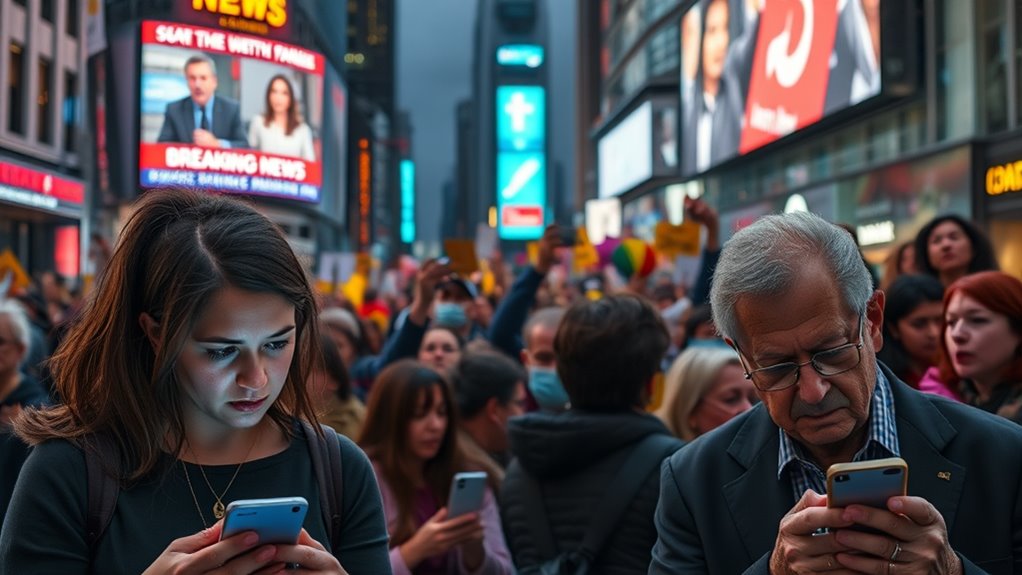
News coverage considerably shapes public opinion by influencing perceptions and framing narratives around societal issues. Media outlets decide what stories to highlight, which can amplify certain topics and diminish others. This selective reporting impacts how issues are perceived, often reinforcing stereotypes or misconceptions. Language choices play a crucial role, evoking emotional responses and shaping audience interpretations. In the end, responsible journalistic practices are vital for promoting informed discourse, and further exploration reveals more about these dynamics.
The Role of Media in Shaping Public Discourse
Media serves as a potent conduit for shaping public discourse, influencing how individuals perceive and engage with societal issues. The representation of various groups and topics in media plays a significant role in framing public narratives. When certain communities are highlighted positively, it promotes comprehension and encourages public engagement, whereas negative portrayals can perpetuate stereotypes and division. This impact is particularly evident in news coverage, where the choice of language, imagery, and context can sway audience perceptions. By amplifying specific stories and perspectives, media outlets determine which issues gain visibility and urgency in the public consciousness. As a result, the effectiveness of media representation directly correlates with the ability of society to engage in informed discussions. As audiences consume this information, their opinions and actions are often molded by the narratives presented, emphasizing the importance of responsible media practices in cultivating a well-informed, engaged citizenry.
The Power of Framing: How Stories Are Told
The framing of news stories notably shapes public perception through deliberate language choices and impactful visual imagery. By selecting specific words and images, media outlets can evoke particular emotions and highlight certain aspects of a story, influencing how audiences interpret the information. Comprehending this influence of framing is essential for recognizing the subtle ways news coverage can sway public opinion.
Language Choices Matter
Even though the choice of language in news coverage may seem subtle, it plays a crucial role in shaping public perception and opinion. Language precision is critical, as specific word choices can evoke distinct emotional responses. For instance, describing a protest as a "riot" versus a "demonstration" can greatly influence how the event is perceived by the audience. Rhetoric techniques, such as loaded language or euphemisms, further improve the influence of framing in news stories. These techniques can either amplify or downplay the importance of events, guiding public sentiment in particular directions. As a result, the language employed by journalists is not merely a tool for communication; it is a significant instrument that can mold societal attitudes and beliefs, highlighting the necessity of careful language choices in news coverage.
Visual Imagery Impact
Visual imagery significantly shapes public perception in news coverage, often serving as a strong framing device. Through visual storytelling, media outlets craft narratives that influence how audiences interpret events. Compelling images can evoke emotional resonance, drawing viewers into the story and impacting their opinions. For instance, photographs depicting human suffering can elicit empathy, whereas images of triumph can inspire hope. The choice of visuals not only emphasizes specific aspects of a story but also frames the broader context in which it is understood. As a result, audiences may form opinions based on the emotional responses elicited by visuals, rather than the facts presented. Therefore, the strategic use of imagery in news coverage is essential in shaping public perception and opinion.
The Impact of Language on Perception
Language plays an essential role in shaping public perception, particularly through the use of emotional language. The choice of words can create distinct frames that influence how information is interpreted, often revealing underlying biases. As a result, comprehending the impact of language can help individuals critically assess news coverage and its effects on public opinion.
Emotional Language Effects
When journalists employ emotionally charged language, they greatly shape readers' perceptions and reactions to news events. This use of emotional resonance can evoke strong feelings, compelling audiences to engage more deeply with the content. Persuasive techniques, such as vivid descriptions and evocative metaphors, further amplify this effect, prompting readers to align their opinions with the portrayed sentiments. As a result, emotionally laden language can create a sense of urgency or empathy, influencing how individuals interpret and respond to information. By framing issues in emotionally impactful terms, journalists can sway public opinion, often leading to a more polarized comprehension of complex topics. In the end, the strategic use of emotional language serves as a formidable tool in shaping societal narratives and perceptions.
Framing and Bias
Although news coverage aims to present facts, the framing of those facts can considerably influence public perception and opinion. Media representation shapes how issues are comprehended, often highlighting certain aspects while downplaying others. This selective portrayal can activate cognitive biases, affecting how audiences process information. For instance, using emotionally charged language can lead to a skewed comprehension, prompting individuals to align their opinions with the framed narrative rather than the underlying facts. Furthermore, the choice of words can create associations that reinforce stereotypes or misconceptions. Ultimately, the way news is framed not just informs but also manipulates public sentiment, demonstrating the profound impact of language on societal viewpoints. Grasping this influence is essential for discerning the intricacies of modern media.
Source Credibility and Its Effect on Trust
As audiences navigate a complex media environment, the credibility of sources plays an indispensable role in shaping trust. Source evaluation becomes vital as individuals discern the reliability of information. Trust metrics, such as accuracy, transparency, and expertise, considerably influence public perception.
- Trust in news can diminish when sources lack transparency.
- Accurate reporting cultivates a sense of security among audiences.
- Expertise improves the perceived reliability of information.
Credible sources can reinforce public trust and encourage informed decision-making. Conversely, misinformation or biased reporting can lead to skepticism and confusion. As individuals increasingly rely on various media outlets, comprehending the factors that contribute to source credibility is essential. By prioritizing credible information, audiences can better navigate their media consumption, ultimately nurturing a more informed society.
The Influence of Social Media on News Consumption
The rise of social media has fundamentally altered how individuals consume news, shaping their perceptions and insight of current events. Social media platforms utilize algorithms that curate content based on user preferences and behaviors, often prioritizing sensational or emotionally charged stories. This selective exposure can lead to echo chambers, where users encounter information that reinforces their existing beliefs as well as limiting diverse viewpoints. Furthermore, the prevalence of user-generated content has shifted the environment of news dissemination. Ordinary individuals now play a crucial role in sharing and shaping narratives, sometimes prioritizing speed over accuracy. This democratization of information can improve engagement but likewise raises concerns about misinformation. As a result, the influence of social media on news consumption is profound, affecting both what stories are highlighted and how these stories are interpreted by the public. Grasping this dynamic is essential for understanding contemporary public opinion formation.
Case Studies: Media Coverage and Public Reaction
Even though media coverage plays a critical role in shaping public reaction, various case studies illustrate how specific events can greatly influence public sentiment and behavior. For instance, the extensive coverage of natural disasters often evokes empathy and prompts community support. Similarly, reports on social justice movements can galvanize public activism.
Key case studies include:
- The public outcry following the coverage of police brutality incidents.
- The overwhelming support for humanitarian efforts after natural disasters.
- The surge in mental health awareness following media portrayals of mental illness.
These examples highlight how media narratives can mobilize public opinion and drive collective action. The emotional response elicited by these reports underscores the potent relationship between media coverage and public reaction, reinforcing the idea that news outlets hold significant influence in shaping societal perspectives and responses to pressing issues.
The Role of Journalistic Ethics in Reporting
Even though media coverage greatly impacts public opinion, the integrity of that coverage depends on the adherence to journalistic ethics. Journalistic integrity serves as the foundation for reliable reporting, ensuring that information is presented fairly and accurately. Journalists often face ethical dilemmas that challenge their commitment to these principles, such as balancing sensationalism with factual reporting or managing conflicts of interest. The choices made in these moments can greatly affect how stories are perceived by the public, shaping narratives that influence societal attitudes. Upholding ethical standards not only cultivates credibility but also encourages informed decision-making among audiences. When journalists prioritize ethics, they contribute to a well-informed society, enabling individuals to form opinions based on accurate information rather than sensationalized or biased reporting. In the end, the role of journalistic ethics is essential in maintaining the trust that the public places in the media.
The Consequences of Misinformation
Misinformation poses significant threats to public comprehension and trust in the media. The proliferation of misleading headlines can distort reality and manipulate public sentiment, leading to dangerous consequences. As individuals struggle to discern fact from fiction, the erosion of trust in credible sources becomes inevitable.
- Increased polarization among communities
- Heightened anxiety and confusion regarding critical issues
- Undermining of democratic processes and informed decision-making
Fact checking initiatives have emerged as a crucial response to combat this challenge, yet they often face obstacles in reaching a broader audience. The effectiveness of these initiatives is compromised when sensationalized reporting overshadows factual content. In the end, the consequences of misinformation extend beyond mere confusion; they create a societal environment where informed discourse is increasingly difficult to achieve, jeopardizing the very foundations of a healthy democracy.
Strategies for Critical Media Consumption
As consumers navigate an increasingly complex media environment, employing strategies for critical media consumption becomes vital. Developing media literacy is fundamental for discerning credible information from misleading content. Key strategies include comprehending the sources of news, questioning the intent behind the messages, and utilizing fact-checking techniques to verify claims made in articles.
| Strategy | Description |
|---|---|
| Source Evaluation | Assess the credibility and background of the source. |
| Cross-Referencing | Compare information across multiple reputable sources. |
| Fact-Checking Techniques | Use tools like Snopes or FactCheck.org for verification. |
| Critical Questioning | Ask who benefits from the information and why. |
Frequently Asked Questions
How Does News Coverage Affect Political Polarization Among the Public?
News coverage plays a significant role in shaping political polarization among the public. Biased narratives presented in media can reinforce existing beliefs, leading to polarization effects that deepen divisions between differing political ideologies. As individuals consume news that aligns with their views, they may become less open to opposing perspectives. This dynamic creates echo chambers, further entrenching partisan identities and promoting a more fragmented political environment, eventually affecting civic discourse and collective comprehension.
What Role Do Visuals Play in Shaping News Narratives?
Visuals play an essential role in shaping news narratives through the technique of visual storytelling. By incorporating images, videos, and graphics, news outlets can improve the emotional impact of their stories, making complex issues more relatable and engaging. This visual content not just captures attention but also influences audience perception, as compelling visuals can evoke strong feelings, finally guiding viewers' comprehension and reactions to the news being presented.
How Do Media Biases Manifest in News Reporting?
Media biases can manifest in news reporting like shadows shaping the contours of a terrain. Through media framing, certain perspectives are highlighted whereas others are downplayed, influencing how audiences perceive events. Editorial choices, such as which stories to cover and the language used, further reinforce these biases. As a result, the portrayal of facts can vary dramatically, leading to a skewed comprehension of issues and events in the public consciousness.
In What Ways Can Public Opinion Influence News Coverage?
Public opinion can greatly shape news coverage by directing the focus of media outlets toward issues that resonate with the audience. As public discourse evolves, journalists often prioritize topics that reflect the interests and concerns of their viewers. This audience engagement can lead to a feedback loop, where media organizations adjust their narratives based on public response, thereby influencing the framing and presentation of news stories to maintain relevance and viewership.
How Can Individuals Improve Their Media Literacy Skills?
Individuals can improve their media literacy skills by actively engaging in critical thinking and source evaluation. This involves questioning the credibility of information, recognizing biases, and distinguishing between fact and opinion. By analyzing various sources, they can better understand differing perspectives and identify reliable information. Furthermore, participating in discussions about media content nurtures deeper insights and encourages a more informed approach to consuming news, in the end enhancing their overall media literacy.