

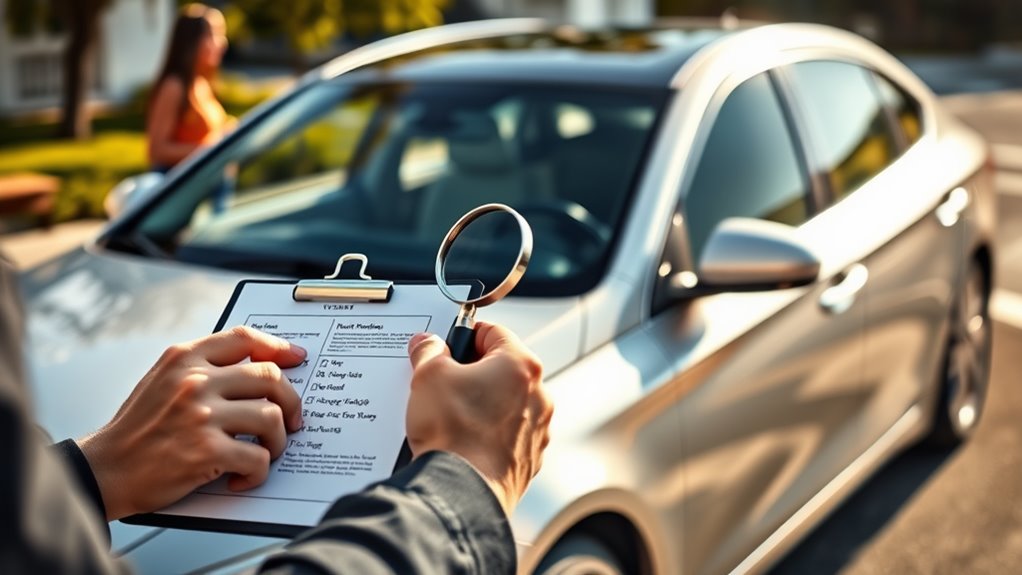
To buy a used car without getting scammed, start by researching the car's market value using tools like Kelley Blue Book. Verify the seller's credentials and inspect the vehicle thoroughly for dents or mechanical issues. Request a vehicle history report to check for past accidents. Understand your financing options and negotiate the price confidently. Always trust your instincts—if something feels off, walk away. Stay tuned to discover more crucial tips for a successful purchase.
Research the Market Value of the Car
When you're in the market for a used car, it's essential to know its market value. Comprehending current market trends can empower you to make informed choices and avoid overpaying. Start by using pricing tools like Kelley Blue Book or Edmunds, which provide reliable estimates based on the vehicle's make, model, year, and condition. These resources help you gauge what others are paying in your area, giving you a strong foundation for negotiation.
Don't forget to check local listings and online marketplaces to see how similar cars are priced. This real-time data can reveal shifts in demand, allowing you to spot potential bargains or overpriced vehicles. Armed with this knowledge, you can confidently engage sellers, ensuring you get the best deal possible. After all, you deserve the freedom to drive away in a car that's worth every penny you spend.
Verify the Seller's Credentials
Before sealing the deal on a used car, it's vital to verify the seller's credentials. Check their seller reputation through online reviews and ratings. Look for feedback from previous buyers; if they've had a positive experience, you're likely in good hands. Don't hesitate to ask for references or contact information for past customers.
Additionally, ascertain the seller has a legitimate business license if they're a dealer. For private sellers, confirm their identity by matching their ID with the vehicle's title. This simple step is fundamental for fraud prevention.
Trust your instincts—if something feels off, it probably is. Remember, you're seeking freedom in your purchase, not a headache down the line. So, take the time to verify who you're dealing with, and you'll feel more confident driving away in your new ride.
Inspect the Vehicle Thoroughly
To guarantee you're making a sound investment, inspecting the vehicle thoroughly is vital. An inspection checklist can help you evaluate the vehicle features and confirm everything is in good shape. Check for cosmetic damage, tire wear, and fluid leaks. Don't forget to look under the hood!
| Inspection Area | What to Look For |
|---|---|
| Exterior | Dents, scratches, rust |
| Interior | Upholstery condition, odors |
| Tires | Tread depth, even wear |
| Engine Compartment | Leaks, corrosion, belts |
| Underbody | Rust, frame damage |
Taking the time to evaluate these areas can save you from potential headaches down the road. Trust your instincts; if something feels off, it probably is. Remember, a thorough inspection empowers you to make a confident choice and embrace the freedom that comes with your new ride!
Request a Vehicle History Report
After inspecting the vehicle thoroughly, the next step is to request a vehicle history report. This report is essential for comprehending the car's past and can save you from costly mistakes. It reveals significant information like previous accidents, title issues, and service history, giving you the freedom to make an informed decision.
With the report in hand, you can assess the vehicle's condition beyond appearances. Knowing the vehicle history improves your negotiating strength, allowing you to negotiate a fair price based on the car's true value. Don't skip this step; the report's significance can't be overstated.
You can obtain a vehicle history report online through services like Carfax or AutoCheck, often for a small fee. Investing in this knowledge not only strengthens you but also guarantees you're making a choice that aligns with your desire for freedom and reliability on the road.
Take the Car for a Test Drive
Once you've reviewed the vehicle history report, it's time to take the car for a test drive. This step is vital; it's your chance to feel the freedom of the open road. Keep these test drive necessities in mind:
- Check Comfort: Make certain you're comfortable in the driver's seat. You'll want to enjoy every trip.
- Assess Performance: Pay attention to acceleration, braking, and steering. How does it respond to your commands?
- Evaluate Driving Conditions: Drive on various surfaces—smooth highways, bumpy streets, and tight turns. This gives you a better sense of how the car handles real-life scenarios.
Feel the thrill as you take it for a spin! Notice any odd noises or vibrations; these could be red flags. A thorough test drive not just helps you assess the vehicle but also guarantees you're making a decision that truly resonates with your sense of adventure.
Understand the Financing Options
When you're ready to buy a used car, comprehending your financing options is essential. You'll want to explore different loan alternatives, check interest rates, and assess what monthly payments fit your budget. Getting a clear picture of your financing will help you make a smarter decision.
Explore Loan Alternatives
Even though you might think dealership financing is your only option, exploring loan alternatives can save you money and provide flexibility. By evaluating other sources, you can regain control over your financing experience. Here are three options to examine:
- Credit Unions: These member-owned institutions often offer lower interest rates and customized service, helping you secure a loan that fits your budget.
- Peer to Peer Lending: This innovative approach connects you with individual lenders, allowing for competitive rates and more negotiation authority.
- Online Lenders: Many online platforms provide quick approvals and personalized options, giving you the freedom to choose a loan that suits your lifestyle.
Don't settle for less—explore these alternatives and take charge of your car-buying experience!
Check Interest Rates
Grasping interest rates is crucial when you're financing a used car, as even a small difference can greatly affect your overall cost. You want to verify you're making a smart choice that aligns with your financial freedom. Start by researching current interest rates from various lenders, as these can vary widely. Look for competitive rates that suit your budget and loan terms. Remember, shorter loan terms often mean higher monthly payments but lower interest paid overall, whereas longer terms can stretch your budget but may cost more in the long run. Comprehending how these factors work together will empower you to negotiate better deals and avoid getting stuck with unfavorable financing. Stay informed, and take control of your financial future!
Assess Monthly Payments
Comprehending your monthly payments is essential for managing your used car financing effectively. It guarantees you stay within your budget and keeps your financial freedom intact. Use a payment calculator to help you visualize what you can afford. Here are three key points for budget planning:
- Set a realistic budget: Don't stretch your finances too thin; aim for an amount that feels comfortable.
- Consider additional costs: Factor in insurance, taxes, and maintenance—these can add up quickly.
- Explore loan terms: Shorter terms mean higher payments but less interest, whereas longer terms lower payments but increase overall costs.
Negotiate the Price With Confidence
When you walk into a negotiation, confidence can make all the difference in your ability to secure a fair price for a used car. Embrace your freedom to negotiate by using effective price negotiation techniques. Start by researching the car’s market value and be ready to present your findings. This knowledge gives you an edge and demonstrates your seriousness. Additionally, remain patient and be willing to walk away if the deal doesn’t meet your expectations. Sellers often respect buyers who stand firm, increasing your chances of securing a better price. Just like learning how to invest in stocks, mastering negotiation takes practice and strategy, so approach the conversation with confidence and preparation.
As you engage with the seller, use confident communicating tips like maintaining eye contact and speaking clearly. Don't be afraid to start with a lower offer; it's a common tactic that can lead to a better deal. Be assertive but respectful, and don't get emotional about the car. If the seller isn't flexible, be prepared to walk away. This mindset not only empowers you but likewise shows you're serious about getting a fair price. Remember, negotiating is about finding common ground, so stay open to discussion.
Review the Paperwork Carefully
After settling on a price, the next step is to review the paperwork carefully. This is your moment to guarantee you're not just getting a car, but a reliable vehicle that can take you where you want to go. Use a paperwork checklist to confirm everything's in order. Here's what to focus on:
- Title: Verify the document authenticity and guarantee the seller has the legal right to sell.
- Vehicle History Report: Check for accidents or major repairs that might affect your freedom on the road.
- Odometer Statement: Make sure the mileage is accurate to avoid surprises down the line.
Taking the time to scrutinize these documents can save you headaches and heartaches. You deserve to drive away with confidence, knowing you made a wise choice. Don't rush—freedom comes from informed decisions!
Trust Your Instincts and Walk Away if Necessary
Trusting your instincts can be your best ally in the used car buying process, especially if something feels off. Your gut feeling often knows more than you realize, serving as a radar for potential scams. If you sense hesitation from the seller or if the deal seems too good to be true, don't ignore that instinctive judgment.
Freedom in car buying means having the confidence to walk away if it doesn't feel right. A reliable vehicle is an extension of your independence, so don't settle for anything less than what feels secure.
If the seller pushes you to make a quick decision or if the paperwork doesn't add up, it's a clear signal to step back. Trust yourself—there are plenty of cars out there. Keep searching until you find the one that resonates with your sense of freedom and peace of mind.
Frequently Asked Questions
What Are Common Red Flags When Buying a Used Car?
In the realm of buying a used car, remember: "You can't judge a book by its cover." Check the title history for any red flags like salvage titles or multiple owners. Be wary of mileage discrepancies; if the odometer readings seem inconsistent, it's a sign to dig deeper. Trust your instincts, and don't rush—finding the right car should feel liberating, not like a gamble. Stay informed, and you'll make a confident choice.
How Can I Tell if the Price Is Fair?
To tell if the price of a used car's fair, start with market research. Check online listings to see what similar models go for in your area. Use price comparison tools to gauge value based on mileage, condition, and features. Don't hesitate to negotiate if the price seems high. Remember, you deserve a deal that reflects the car's true worth and gives you the freedom to enjoy your ride without overspending.
Should I Buy From a Dealership or a Private Seller?
When deciding whether to buy from a dealership or a private seller, consider the dealership advantages like warranties and financing options. They often provide a more reliable experience with less hassle. Conversely, private sellers might offer lower prices, but there are private seller risks, such as hidden issues or lack of recourse. Weigh your priorities—if you value peace of mind, a dealership might be your best bet.
What's the Best Time to Buy a Used Car?
Think of buying a used car like fishing; timing's everything. The best time to reel in a great deal is during the end of the year, when dealerships want to clear their lots. You'll find seasonal discounts that can save you a bundle. Plus, as new models roll in, you'll have more options to choose from. So, cast your line at the right moment and drive away with freedom.
Can I Negotiate After a Pre-Purchase Inspection?
Absolutely, you can negotiate after a pre-purchase inspection! In fact, it's one of the best pre-purchase tactics you can use. If the inspection reveals any issues, you've got leverage to discuss price adjustments with the seller. Remember, the inspection's importance can't be overstated; it helps you avoid future headaches. So, don't hesitate to bring up any findings and negotiate confidently—it's your chance to secure a better deal!