

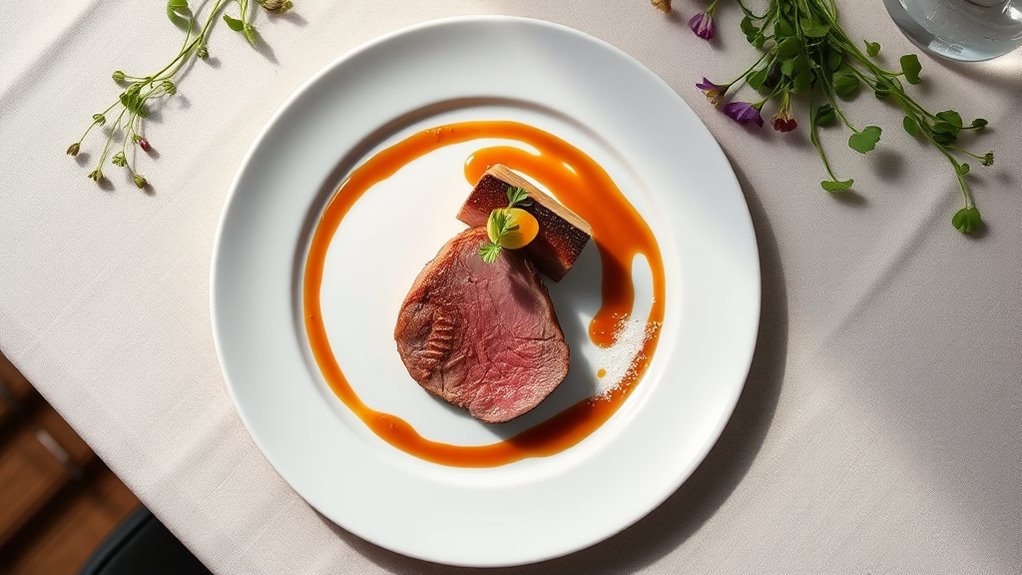
To master the art of food plating like a chef, you'll need to reflect on the principles of visual appeal, where a harmonious balance of plate elements creates a feast for the eyes. Choose a plate that complements your dish's colors, textures, and composition, and don't forget to select utensils that harmonize in shape, size, and material. Balance colors and textures, create focal points, and add garnishes to enhance your dish from ordinary to extraordinary. With these fundamentals in place, you'll be well on your way to plating like a pro – and there's even more to discover to advance your creations to the next level.
Understanding the Principles of Visual Appeal
Regarding food plating, the first bite is taken with the eyes, making visual appeal a vital aspect of the dining experience. You want to create a feast for the eyes, and it all starts with grasping the principles of visual appeal. One key element is visual symmetry, which involves balancing elements on the plate to create a sense of harmony. You can achieve this by placing ingredients in a way that creates a sense of mirroring or radial balance. Another important aspect is negative space, which refers to the empty areas between and around the ingredients. By strategically using negative space, you can create a clean and uncluttered look that lets the ingredients shine. By incorporating these principles, you'll be able to craft a visually stunning dish that sets the tone for a memorable dining experience.
Choosing the Right Plate and Utensils
You're about to plate your dish, but have you considered the foundation of your masterpiece? The plate shape you choose can either complement or clash with your culinary creation, so it is crucial to select one that improves the overall visual appeal. Furthermore, don't forget that the utensils you pair with your plate can likewise impact the balance and harmony of your presentation.
Plate Shape Matters
A well-chosen plate can lift your dish from ordinary to extraordinary. You'll want to select a plate that complements the colors, textures, and composition of your culinary creation. Consider plate dimensions that allow your dish to breathe, with enough negative space to create visual appeal. Round plates are ideal for circular or symmetrical compositions, whereas square or rectangular plates work well for linear or asymmetrical arrangements. Experiment with different plate styles, such as rustic, modern, or vintage, to add an extra layer of personality to your presentation. By choosing the right plate, you'll lift your dish from a mere meal to a work of art.
Utensil Balance Counts
Now that you've carefully selected a plate that complements your dish, it's time to think about the utensils that will accompany it. The right utensils can boost your presentation and create a cohesive look. When selecting utensils, consider the type of dish, the number of courses, and the diner's comfort. Balance is key, so choose utensils that harmonize in shape, size, and material. For utensil arrangement strategies, try placing the fork to the left of the plate, with the tines facing up, and the knife to the right, blade facing inward. Use utensil selection techniques like mixing metals, woods, or ceramics to add visual interest. By thoughtfully selecting and arranging your utensils, you'll create a polished, professional look that improves the dining experience.
Balancing Colors and Textures
Though a dish's flavors and aromas are vital, its visual appeal can make or break the dining experience. To enhance your plating game, you need to balance colors and textures. Apply color theory principles to create a harmonious palette. Combine warm and cool colors, and balance brights with neutrals. Don't be afraid to add pops of color with garnishes or sauces. Texture contrast is likewise significant. Pair crunchy with smooth, soft with crispy, and creamy with firm. The combination will add depth and visual interest to your dish. Experiment with different ingredients to find the perfect balance. Remember, the key is to create a visually appealing combination that complements the flavors and aromas of your dish. By perfecting color and texture balance, you'll take your plating skills to the next level.
Creating Focal Points and Harmony
By thoughtfully arranging elements on the plate, you can direct the diner's eye to the most appealing aspects of your dish, creating focal points that draw attention and improve the overall visual appeal. Effective focal point techniques involve placing the main ingredient in the center of the plate, using contrasting colors and textures, and balancing heights and depths. Harmony elements, such as symmetry, asymmetry, and visual flow, in addition play an essential role in creating a visually appealing dish.
| Focal Point Technique | Harmony Element | Description |
|---|---|---|
| Center placement | Symmetry | Place the main ingredient in the center of the plate, creating a sense of balance and harmony. |
| Contrasting colors | Visual flow | Use colors that complement or contrast with each other to guide the diner's eye through the dish. |
| Balancing heights | Asymmetry | Vary the heights of elements on the plate to create visual interest and balance. |
| Framing | Visual flow | Use garnishes or sauces to frame the main ingredient, drawing attention to it. |
Adding Garnishes and Embellishments
The final touches of your dish await – it's time to add garnishes and embellishments, which can improve your culinary creation from ordinary to extraordinary. You're not just adding a sprinkle of parsley; you're crafting a visually stunning experience. Choose garnish types that complement your dish's flavors and textures, such as microgreens, citrus zest, or toasted nuts. Edible flowers like violas, pansies, or nasturtiums can add a pop of color and whimsy. Consider the shape, size, and color of each garnish to create balance and harmony on the plate. Don't overdo it – remember, less is often more. A few strategically placed garnishes can raise your dish from bland to grand. By thoughtfully selecting and arranging your garnishes, you'll create a masterpiece that's almost too beautiful to eat. Almost.
Plating for Different Cuisines and Dishes
As you explore the domain of food plating, you'll discover that different cuisines and dishes require unique approaches to presentation. Asian cuisine, for instance, is all about simplicity and minimalism, whereas Italian artistry calls for bold colors and ornate garnishes. Mexican flair is all about lively hues and playful textures, whereas French elegance demands refined, sophisticated arrangements. When plating Indian dishes, you'll want to highlight the aromatic spices, and Mediterranean freshness is all about showcasing the freshness of ingredients. American comfort food often calls for hearty, rustic presentations, and Middle Eastern aromas demand exotic, intricate designs. By comprehending these distinct styles, you can tailor your plating to complement the cuisine and create a truly immersive dining experience.
Frequently Asked Questions
Can I Plate Food in Advance to Save Time?
You're wondering if you can plate food in advance to save time. The answer is, it depends. If you're planning a simple salad or cold dishes, go for it! Just store them in airtight containers in the fridge or freezer using proper food storage techniques. Nevertheless, if you're dealing with hot or delicate dishes, it's best to plate just before serving to preserve texture and presentation. Practice your plating techniques and you'll be a pro in no time!
How Do I Prevent Garnishes From Wilting or Browning?
Are you tired of watching your beautifully arranged garnishes wilt away? To prevent this, you'll need to master garnish preservation techniques. Store delicate herbs like basil and mint in airtight containers with a damp paper towel to keep them fresh. For edible flowers, gently place them between paper towels and refrigerate. By using the best storage methods, you'll guarantee your garnishes stay lively and fresh, elevating your dishes to the next level.
What Are Some Edible Flowers Safe for Garnishing?
You're looking for edible flower varieties to enhance your dishes! Some safe options include violas, pansies, and nasturtiums, which not just add visual appeal but additionally offer health benefits. Violas are rich in antioxidants, whereas pansies are packed with vitamins A and C. Nasturtiums, with their peppery flavor, are a great source of vitamin C and potassium. Get creative and experiment with these edible flowers to add a pop of color and nutrition to your plates!
Can I Reuse Garnishes or Do They Need to Be Fresh?
You're wondering if you can reuse those beautiful garnishes or if freshness is key. The answer is, it depends. For delicate flowers and herbs, it's best to use them immediately for ideal flavor and appearance. But for heartier garnishes like citrus wheels or microgreens, you can store them in airtight containers in the fridge for up to a week. Just be certain to check their freshness daily and give them a quick rinse before reusing. Proper garnish storage guarantees you can reuse them without sacrificing flavor or visual appeal.
How Do I Plate for Guests With Dietary Restrictions?
As you step into the role of culinary host, you're met with a delicate dance of dietary preferences, each guest a unique puzzle piece. You must carefully consider portion control, ensuring each dish is customized to their specific needs. Envision a colorful mosaic, woven with threads of gluten-free, vegan, and sugar-free options. By masterfully balancing flavors and textures, you'll create a harmonious culinary experience that respects and delights each guest's individuality.