

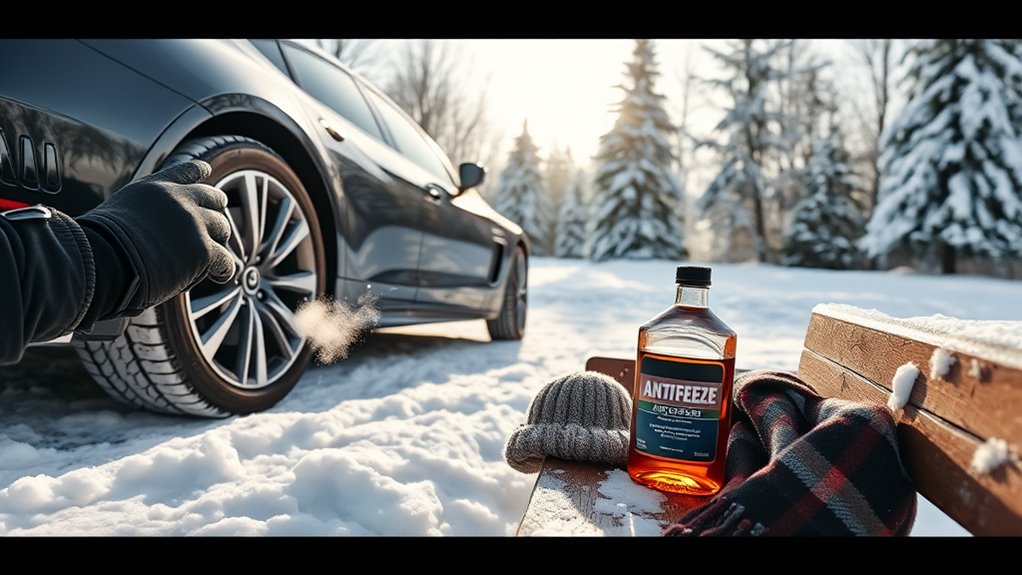
To winterize your car, start by checking and replacing your battery to guarantee it can handle cold weather. Inspect and change your oil, and test your antifreeze levels to prevent freezing. Examine your tires for proper pressure and tread, and replace worn wiper blades for clear visibility. Don't forget to check your lights, keep your gas tank full, and stock an emergency kit. You might find even more tips to improve your winter preparedness.
Check and Replace Your Battery
How can you guarantee your car starts reliably during the cold winter months? Start with solid battery maintenance. Cold weather can sap your battery's energy, so it's essential to keep it in top shape. First, check the battery terminals for corrosion and clean them if needed. A clean connection guarantees your battery delivers the juice when you need it most.
Next, test the battery's charge—if it's weak, consider replacing it before winter hits. Look for batteries rated for cold weather; they're designed to perform better in frigid conditions. Additionally, keep your battery warm by parking in a garage or using a battery blanket.
Lastly, remember these winter battery tips: regularly check fluid levels and confirm your battery is securely mounted. By following these steps, you'll enjoy the freedom of worry-free winter driving, knowing your car's ready to roll every time you turn the key.
Inspect and Change Your Oil
When winter hits, choosing the right oil type is essential for your car's performance. You should check your oil levels regularly and change the oil filter without delay to keep everything running smoothly. Taking these steps will help guarantee your vehicle stays reliable through the cold months.
Choose Suitable Oil Type
Choosing the right oil type for your car is crucial as temperatures drop. You want your engine to perform smoothly, so consider switching to synthetic oil if you haven't already. Synthetic oil flows better in cold weather and offers superior protection, giving you the freedom to drive with confidence. If you're using conventional oil, confirm it's the right viscosity for winter conditions. A thinner oil can help your engine start more easily in the cold, whereas thicker oil might struggle. Don't let the chill ground your adventures—pick an oil that keeps you moving. Whatever you choose, verify it meets your vehicle's specifications to maximize performance and maintain your freedom on the road.
Check Oil Levels Regularly
After selecting the right oil type, it's important to keep an eye on your oil levels throughout the winter months. Regularly checking your oil guarantees ideal oil viscosity, which is vital for maintaining your engine's performance. Cold temperatures can cause oil to thicken, so you might need to adjust your oil type or change it more frequently. Don't wait for warning lights to remind you; make it a habit to inspect your oil levels every few weeks. If you notice the oil is low or dirty, topping it off or replacing it can save you from potential engine problems down the road. Keeping your oil in check lets you enjoy the freedom of the open road, no matter the weather.
Change Oil Filter Promptly
To keep your engine running smoothly during the winter months, you should change your oil filter regularly. A clean oil filter guarantees that your engine oil stays free from contaminants, allowing it to perform at its best. Depending on your vehicle's maintenance schedules, you might need to replace your filter every 3,000 to 5,000 miles, or as recommended by the manufacturer. There are several oil filter types available, including cartridge and spin-on filters, so choose one that suits your needs. By staying on top of your oil filter changes, you'll improve your engine's efficiency and longevity, giving you the freedom to navigate those icy roads without worry. Embrace this simple task, and enjoy the ride!
Test Your Antifreeze Levels
Despite winter weather can be harsh on your vehicle, checking your antifreeze levels is a simple yet vital step in preventing engine damage. You want your car to run smoothly, and proper antifreeze levels are critical for that. Start with antifreeze testing, which you can do using a hydrometer or antifreeze tester. This will show you if your coolant's concentration is sufficient to handle freezing temperatures.
If the levels are low or the coolant looks dirty, it's time for a coolant replacement. This guarantees your engine stays protected from freezing and overheating. Don't neglect this task; it only takes a few minutes and can save you from costly repairs down the road. You've got the freedom to explore the open road, but you need your vehicle in top shape to do so. So, grab your antifreeze tester and tackle this simple task to keep your adventures going all winter long!
Examine Your Tires
With your antifreeze levels checked and ready for winter, it's time to focus on your tires. Ensuring your tires are in top shape is essential for traversing icy roads and maintaining that sense of freedom on the open highway. Start by checking the tire pressure; cold temperatures can cause it to drop. Inflate your tires to the recommended level, which you'll find in your owner's manual or on the driver's side door jamb.
Next, inspect the tire tread. Worn-out tread can lead to a loss of traction, so use the penny test—insert a penny into the tread with Lincoln's head facing down. If you see all of Lincoln's head, it's time for new tires.
Replace Wiper Blades
As winter weather sets in, it's crucial to verify your wiper blades are up to the task of clearing away snow and ice. You don't want to be caught in a storm with ineffective wipers! Follow these wiper maintenance tips to confirm you're ready for the road ahead:
- Inspect regularly: Check your wipers for any signs of wear or damage.
- Choose the right materials: Opt for rubber or silicone blades that resist freezing.
- Replace old blades: If they leave streaks or miss spots, it's time for a change.
- Consider winter-specific wipers: They're designed to handle harsh conditions better.
- Clean your blades: Wipe them down to remove grime and debris for peak performance.
Fill Up on Washer Fluid
As winter weather brings snow and slush, having enough washer fluid is essential for maintaining visibility. You'll want to choose a fluid that can handle low temperatures to prevent freezing. Keeping your washer fluid topped off guarantees you're ready for whatever the road throws at you.
Importance of Washer Fluid
Since winter weather can bring snow, ice, and slush, having a full reservoir of washer fluid is crucial for maintaining visibility on the road. You want to verify your washer fluid is up to the task, so keep these points in mind for effective washer fluid maintenance:
- Choose washer fluid types designed for freezing temperatures.
- Regularly check your reservoir to avoid running low.
- Use fluids with antifreeze properties to prevent freezing.
- Keep an extra bottle in your trunk for emergencies.
- Clean your windshield wipers to guarantee peak performance.
Choosing the Right Type
Choosing the right washer fluid is vital for keeping your visibility clear during winter months. You want a fluid that can withstand low temperatures and effectively remove grime, ice, and snow. Look for a fluid particularly designed for winter use; it'll help prevent your washer system from freezing up. If you've got winter tires, you'll appreciate how important good visibility is when maneuvering slippery roads. Even if you're using all season tires, you still need that clarity for those unexpected winter storms. Check your fluid levels regularly, and don't hesitate to top off with a quality winter washer fluid. Your freedom on the road hinges on staying safe and visible, so make this simple update a priority!
Verify Your Brakes
Brakes are one of the most critical safety features of your car, especially during winter when road conditions can be unpredictable. You want to guarantee your brakes are up to the task. Here's what you should check:
- Inspect the brake pads for wear; they shouldn't be too thin.
- Check the brake fluid level; low fluid can cause performance issues.
- Look for any leaks in the brake lines.
- Test the brake response; they should engage smoothly without grinding.
- Listen for unusual noises when braking; this could indicate a problem.
Taking these steps can provide peace of mind as you navigate icy roads. Remember, your freedom on the open road relies heavily on your brakes. Don't compromise safety—confirm everything's in top shape so you can embrace winter adventures with confidence!
Check Your Lights
After confirming your brakes are in top condition, it's time to turn your attention to your car's lights. You want to hit the road with confidence, knowing you can see and be seen, especially in winter's low light. Start by checking the light brightness of your headlights, taillights, and turn signals. Dim lights can be a danger, so replace any burnt-out bulbs. Next, inspect your headlight alignment; misaligned lights can blind other drivers or leave you in the dark. To adjust them, park your car on a level surface and follow your owner's manual for proper alignment techniques. Don't forget to test your fog lights and brake lights too. Keeping your lights in top shape not only improves your visibility but also guarantees you're free to roam without worry this winter. Embrace the open road, but do it safely!
Stock an Emergency Kit
When winter weather hits, having an emergency kit in your car can make a big difference. You'll want to include crucial items like safety gear and a reliable food and water supply. Let's go over what you should pack to keep yourself safe and prepared.
Essential Items to Include
As winter approaches, it's crucial to stock your emergency kit with indispensable items that can help you stay safe and comfortable during unexpected situations on the road. Being prepared gives you the freedom to enjoy your travels without worry. Here are fundamental items to include:
- Warm blankets or sleeping bags
- Extra winter gear, like gloves and hats
- Non-perishable snacks and water
- A flashlight with extra batteries
- Basic emergency supplies, like a first aid kit
Having these items on hand guarantees you're ready for anything. It's not just about surviving; it's about thriving in winter conditions. So, take a moment to gather these fundamentals, and hit the road with confidence, knowing you're prepared for whatever comes your way!
Safety Gear Necessities
Stocking your emergency kit with the right safety gear is crucial for winter driving. You never know when you might face unexpected challenges on the road, and having a well-equipped safety kit can make all the difference. Here's a quick guide on important emergency supplies you should include:
| Item | Purpose |
|---|---|
| First Aid Kit | Treats minor injuries |
| Flashlight | Provides light during emergencies |
| Blanket | Keeps you warm if stranded |
| Jumper Cables | Helps restart a dead battery |
These items can improve your freedom on the road by ensuring you're prepared for whatever winter throws your way. Don't hit the road without a robust safety kit; it's your ticket to peace of mind.
Food and Water Supply
It's vital to include food and water in your emergency kit for winter travel. You never know when you might get stranded, so having the right supplies can make all the difference. Stock up on some fundamental items that keep you fueled and hydrated:
- Non-perishable emergency snacks (like granola bars or nuts)
- Canned food (easy to heat if you have a way)
- Hydration options (bottled water or sports drinks)
- Thermos with hot soup (for warmth and nutrition)
- Instant coffee or tea (to lift your spirits)
Preparing for the unexpected gives you peace of mind. With these supplies, you'll be ready to tackle any winter challenge as you savor that sweet freedom of the open road.
Consider a Professional Inspection
When winter approaches, scheduling a professional inspection can be a smart move to guarantee your car is ready for the harsh conditions ahead. You value your freedom, and that means your vehicle needs to perform reliably, regardless of the weather. A professional inspection can pinpoint issues that might not be visible to the untrained eye, ensuring your car's components are up to par.
During this inspection, a technician will follow a thorough maintenance checklist, covering everything from brakes and battery to tires and fluids. Addressing any concerns now can save you from breakdowns later, keeping you on the road and free to explore. Plus, knowing your car's in top shape gives you peace of mind as you tackle winter adventures. Don't hesitate—take the step to secure your freedom this winter with a professional inspection. Your vehicle will thank you!
Keep Your Gas Tank Full
Keeping your gas tank full can be a simple yet effective way to prepare for winter driving. A full tank not only aids in preventing fuel line freeze but also gives you the freedom to travel without constant stops for gas. Plus, it can improve fuel efficiency during those chilly months. Here are some fuel efficiency tips and winter driving precautions to take into account:
- Minimize condensation: A full tank reduces moisture build-up in your gas tank.
- Emergency preparedness: A full tank guarantees you can reach safety if stranded.
- Avoid running on empty: Keeping your tank above a quarter full helps maintain fuel system health.
- Stay warm: If you need to idle for heat, more fuel means you can stay put longer.
- Plan your trips: Full tanks allow for spontaneous adventures without worrying about fueling up.
Frequently Asked Questions
How Often Should I Wash My Car in Winter?
You should wash your car regularly in winter, ideally every two weeks. The car washing frequency helps remove road salt and grime that can damage your vehicle's paint and undercarriage. For effective winter maintenance, consider using a touchless car wash to avoid scratches. Don't forget to clean your wheel wells, too! Keeping your car clean not just protects it but guarantees you feel free and confident on the road, no matter the weather.
Can I Use Regular Water for Windshield Washer Fluid?
You might think using regular water for your windshield washer fluid is a quick fix, but it's not the best choice. In freezing temperatures, regular water can freeze, leaving you with a frozen windshield and limited visibility. Instead, consider windshield washer alternatives designed for cold weather. These solutions won't freeze as easily and will keep your visibility clear, giving you the freedom to drive safely no matter the conditions outside.
What's the Best Way to Keep My Windows Frost-Free?
To keep your windows frost-free, consider using window treatments like insulating curtains or reflective foil. These can help maintain a warmer temperature inside your car. In terms of defrosting techniques, you can use a homemade solution of vinegar and water on your windows before freezing temperatures hit. This helps prevent frost from forming. Plus, always start your engine and turn on the defrost setting to clear that ice quickly and efficiently!
Should I Cover My Car During Winter Storage?
Covering your car during winter storage is a smart move. A car cover offers protection from snow, ice, and debris, keeping your ride looking great. It helps prevent rust and fading, so you'll enjoy that freedom of driving a well-maintained vehicle come spring. Plus, it can deter pests from making your car their winter home. For the best winter storage tips, make sure you choose a breathable cover that fits snugly.
How Do I Prevent My Tires From Freezing?
Did you know that properly inflated tires can improve fuel efficiency by up to 3%? To prevent your tires from freezing, keep an eye on tire pressure, as it can drop with the temperature. Regular winter maintenance is essential; check your tire pressure weekly and make adjustments as needed. Keeping your tires in shape not just improves your driving experience but additionally gives you the freedom to roam confidently, even in cold weather.