

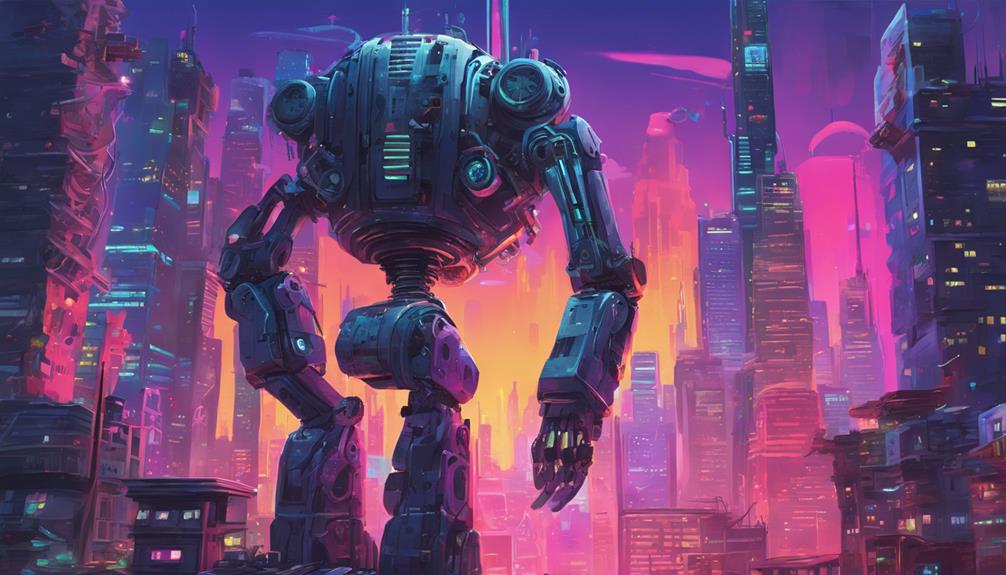
AI is reshaping the creative industries in profound ways, as machine learning algorithms and artificial intelligence challenge traditional notions of human creativity, authorship, and ownership. From generating art that raises ethical dilemmas to composing music that transforms sonic possibilities, AI is breaking boundaries. Robot writers are reshaping the face of creative writing, whilst AI-driven tools are streamlining film production and transforming business models forever. As the lines between human and machine creativity continue to blur, one thing is clear: the future of creativity is being rewritten, and it's crucial to explore the implications and opportunities this shift presents.
AI-Generated Art: A New Reality
As the boundaries between human creativity and machine learning continue to blur, AI-generated art is emerging as a provocative phenomenon that challenges our perception of what it means to be creative. With AI algorithms capable of producing breathtaking pieces, the art world is grappling with the implications of machine-generated masterpieces. The rise of AI-created art has sparked intense debate, with some hailing it as a revolutionary breakthrough, whereas others view it as a threat to human creativity.
At the heart of this controversy lies the question: can machines truly be creative? As AI-generated art gains traction, it raises ethical dilemmas about authorship and ownership. Who should be credited as the creator of an AI-generated masterpiece – the human who programmed the algorithm or the machine itself? Moreover, what are the implications for the art market, where the value of a piece is often tied to the artist's reputation and skill?
The emergence of AI-generated art additionally raises questions about the role of human intuition and emotion in the creative process. Can machines replicate the emotional depth and complexity that human artists bring to their work? As AI-generated art continues to evolve, it's evident that the art world will need to adapt and redefine what it means to be creative in the age of machine learning. One thing is certain – the boundaries between human and machine creativity will continue to blur, and the implications will be far-reaching.
The Rise of Robot Writers
Five years ago, robot writers were dismissed as a novelty, but today they're producing news articles, fiction, and even entire scripts, forcing the literary world to confront the possibility that machines may soon be their toughest competitors. The rise of robot writers has sparked a heated debate about the future of creative writing. With automated storytelling capabilities, AI-powered content creation is becoming increasingly sophisticated, raising ethical considerations about the role of humans in the writing process.
As AI-generated content becomes more prevalent, copyright implications are additionally coming to the forefront. Who owns the rights to a story written by a machine? Should AI algorithms be considered co-authors or merely tools? These questions are yet to be fully addressed, but one thing is clear: robot writers are here to stay. They're already being used to generate news articles, sports reports, and even entire books.
While some argue that AI-generated content lacks the emotional depth and nuance of human-written work, others see the potential for AI to augment human creativity, freeing writers to focus on higher-level tasks. As the literary world grapples with the implications of robot writers, one thing is certain: the future of creative writing will be shaped by the intersection of human imagination and artificial intelligence.
Music Composition Goes Digital
As music composition goes digital, AI is revolutionizing the industry in several ways. It's generating melodies with algorithmic precision, creating synthetic sound designs that were previously unimaginable, and even facilitating digital collaborations that transcend geographical boundaries. These innovations are redefining the music-making process, and it's crucial to explore their implications.
Algorithmic Melody Generation
Music composition, an art form long believed to be the exclusive domain of human creativity, is now being transformed by algorithmic melody generation. This technology has enabled computers to create unique and complex melodies, challenging the notion that music composition is solely a human endeavor. Creative algorithms are being developed to manipulate melodies, generating an infinite number of possibilities.
| Human Composition | Algorithmic Composition |
|---|---|
| Limited by human creativity | Unlimited possibilities |
| Time-consuming and labor-intensive | Fast and efficient |
| Prone to creative blocks | Consistently generates new ideas |
Algorithmic melody generation has opened up new avenues for music creation, allowing artists to focus on other aspects of the creative process. It's no longer about coming up with the perfect melody, but about manipulating and refining the output of these creative algorithms. This shift has the potential to democratize music creation, providing artists with the tools to bring their vision to life. As the technology continues to evolve, it will be interesting to see how it shapes the music industry and the creative process as a whole.
Synthetic Sound Design
Computers are now capable of generating an astonishing array of sounds, from eerie ambient textures to percussive timbres, thanks to synthetic sound design, which is revolutionizing the way composers approach music composition. This sonic innovation is driven by machine learning algorithms that can analyze and replicate the intricacies of acoustic instruments, creating virtual counterparts that are virtually indistinguishable from the real thing. With the ability to craft unique sounds and timbres, composers are now free to explore new sonic environments and push the boundaries of music creation. Virtual instruments, once limited to basic simulations, can now rival their acoustic counterparts in terms of expressiveness and nuance. As a result, music composition is becoming increasingly democratized, with creators of all levels able to access professional-grade sounds and tools. This democratization is opening up new avenues for creative expression, allowing artists to focus on the art of music-making rather than the technicalities of instrumentation.
Digital Music Collaboration
With the rise of digital music collaboration tools, composers can now seamlessly connect with fellow musicians and producers from around the globe, fostering a new era of creative synergy. This shift towards digital partnership has opened up new paths for artists to co-create music, transcending geographical boundaries and time zones. Cloud-based platforms have made it possible for multiple collaborators to work on a single project simultaneously, facilitating real-time cooperation and speeding up the creative process.
These digital tools have enabled artists to tap into a global talent pool, allowing them to find the perfect collaborator for their project, regardless of their whereabouts. This democratization of music creation has given rise to a new wave of innovative and diverse sounds, as artists from various cultural backgrounds come together to create something unique.
In this digital terrain, the possibilities for creative experimentation are boundless, and the outcomes are often stunning. As digital music collaboration continues to advance, it's evident that the future of music composition is vibrant, daring, and limitless.
The Future of Human Creativity
Human creativity is poised to undergo a transformative shift as AI assumes a more prominent role in the creative process. As machines learn to generate innovative ideas and iterate on existing ones, the boundaries between human and machine creativity will continue to blur. This raises important ethical implications, particularly in the domain of human-machine collaboration. As AI-generated content becomes more prevalent, it's crucial to establish clear guidelines on authorship, ownership, and accountability.
The future of human creativity will likely revolve around creative independence, where humans define the problems and AI assists in finding solutions. This collaborative approach will enable artists to focus on high-level creative decisions, whilst AI handles the more mundane tasks. Artistic expression will flourish as humans are freed from the constraints of time and resources, allowing them to explore new ideas and push the boundaries of their craft.
Ultimately, the integration of AI in the creative process will enhance human capabilities, rather than replace them. By leveraging the strengths of both humans and machines, we can unlock new forms of creative expression and innovation. As the relationship between humans and AI continues to evolve, it's essential to prioritize transparency, accountability, and ethical considerations to ensure that the benefits of AI-driven creativity are shared by all. By doing so, we can harness the full potential of human creativity and unlock a brighter, more inspired future.
AI's Role in Film Production
In film production, AI is taking on a significant role, particularly in the areas of script analysis and visual effects generation. By leveraging machine learning algorithms, script analysis tools can help writers identify plot holes, character inconsistencies, and even suggest alternative dialogue. Meanwhile, AI-generated visual effects are allowing filmmakers to create stunning, realistic scenes at a fraction of the cost and time.
Script Analysis Tools
Script analysis tools, energized by AI, are revolutionizing film production by providing writers and directors with instant feedback on characters, plot holes, and pacing. These tools can analyze dialogue, breaking down scenes to identify areas of improvement, and offer suggestions for refinement. This instant feedback loop enables creators to fine-tune their scripts, ensuring that characters are well-developed and plot structures are cohesive. AI-driven script analysis can furthermore help identify issues with character development, such as inconsistent motivations or underutilized arcs. By streamlining the script development process, these tools give writers and directors the freedom to focus on creative vision rather than getting bogged down in details. With AI's help, filmmakers can craft stories that resonate with audiences, pushing the boundaries of what's possible in film. As the industry continues to evolve, script analysis tools will play an increasingly important role in shaping the future of cinematic storytelling.
Visual Effects Generation
AI-powered visual effects generation is transforming film production by enabling the rapid creation of photorealistic environments, characters, and objects that were previously impossible to achieve. This innovation is freeing filmmakers from the limitations of traditional visual effects, allowing them to push the boundaries of storytelling and creativity. With machine learning, the animation revolution is in full swing, enabling the creation of complex characters and scenes that would have been unthinkable just a few years ago.
Computer graphics, an essential aspect of visual effects, are also experiencing a significant innovation impact. AI-driven tools can now generate detailed, realistic textures and patterns, adding depth and nuance to on-screen environments. This not only saves time and resources but additionally opens up new possibilities for filmmakers to experiment with innovative ideas and styles. As a result, the film industry is witnessing a surge in creative freedom, with artists and directors no longer restricted by the technical limitations of traditional visual effects. With AI-powered visual effects generation, the possibilities are limitless, and the future of film production looks brighter than ever.
Changing Business Models Forever
Revolutionary technologies like artificial intelligence are rewriting the rules of engagement, forcing creative industries to rethink their revenue streams and adapt to novel business models that prioritize experience over ownership. The impact of AI is being felt across various sectors, from music and film to fashion and art, as traditional business models are being disrupted and new opportunities for innovative monetization emerge.
The shift towards experience-based models is driven by changing consumer behavior, with people increasingly valuing access over ownership. This has led to the rise of subscription-based services, where users can access a wide range of content for a flat monthly fee. For creative industries, this means rethinking how they generate revenue and interact with their customers.
Here are three key ways AI is changing business models in creative industries:
- Pay-per-use models: AI-powered platforms are enabling pay-per-use models, where customers only pay for the content they consume.
- Dynamic pricing: AI-driven dynamic pricing allows companies to adjust prices in real-time, based on demand and other factors.
- Data-driven revenue streams: AI is enabling companies to monetize their data, creating new revenue streams and opportunities for growth.
As AI continues to disrupt traditional business models, creative industries must adapt and innovate to stay ahead of the curve. By embracing new technologies and revenue streams, they can access new opportunities for growth and success.
Embracing the AI-Powered Shift
More than 80% of creative industry leaders agree that embracing AI-driven innovation is crucial to staying competitive in today's fast-paced market. As the industry undergoes a significant transformation, creative professionals are finding new ways to leverage AI to open up creative possibilities and stay ahead of the curve.
| Benefits of AI-Driven Innovation | Industry Impact |
|---|---|
| Improved creativity and productivity | Increased efficiency and cost savings |
| Data-driven insights for informed decisions | Enhanced customer experiences and engagement |
| Scalability and flexibility in production | Novel business models and revenue streams |
By embracing AI-driven innovation, creative industries can tap into new sources of inspiration, automate mundane tasks, and focus on high-value creative work. This shift is not about replacing human creativity but about augmenting it with the capabilities of technology. As the industry continues to evolve, those who adapt to the changing terrain will thrive, whereas those who resist will be left behind. By leveraging AI as a collaborative tool, creatives can push the boundaries of their work and explore possibilities that were previously unimaginable. The future of work and AI will be defined by a harmonious relationship between human ingenuity and machine efficiency, enabling professionals to innovate at an unprecedented scale. As this synergy deepens, businesses and individuals who embrace technological advancements will gain a competitive edge in an ever-evolving landscape.
The current technological revolution is not just a passing trend; it's a fundamental shift in the way creative industries operate. By embracing AI-driven innovation, creative professionals can unveil new creative possibilities, drive growth, and stay competitive in today's fast-paced market. As the industry transforms, one thing is clear: AI is not just a tool, but a catalyst for creative freedom and innovation.
Frequently Asked Questions
Will AI Replace Human Graphic Designers in the Advertising Industry?
Will AI replace human graphic designers in the advertising industry? It's unlikely, as AI design tools currently can't replicate human creativity. AI is proficient at automating repetitive tasks, but it lacks the originality and emotional connection humans bring to design. Although AI can generate ideas, it's up to humans to refine and execute them. The industry needs human intuition and empathy to create campaigns that resonate with people, so graphic designers can rest easy – their jobs are safe from AI takeover.
Can Ai-Generated Music Be Copyrighted by Its Creators?
They wonder if AI-generated music can be copyrighted by its creators. This question sparks debate on AI music ownership and copyright implications. Currently, copyright law protects human creators, but AI-generated works blur the lines. If AI music is copyrighted, it raises questions about the role of human involvement. Do creators who input data and train AI models own the output, or is it a collaborative effort between human and machine?
How Will AI Change the Film Editing Process in Hollywood?
When Martin Scorsese edited 'The Wolf of Wall Street,' he spent 14 months refining the film's rhythm. With AI-driven innovation, that process will soon be streamlined, freeing creatives to concentrate on high-level storytelling. AI-assisted editing tools will bring unprecedented efficiency, but might pose a risk to job built job roles. As Hollywood adapts, it's essential to strike a balance between technology and human creativity, ensuring AI boosts the art form without stifling it.
Will Ai-Assisted Art Be Considered "Real" Art in the Future?
She wonders if art generated with AI assistance will be deemed "real" art in the future. The question sparks debates around artistic authenticity and creativity. As AI-generated art blurs the lines between human and machine, it raises ethical implications about cultural value. Will society accept art crafted by algorithms, or will it be seen as inauthentic?
Can AI Be Used to Detect and Prevent Artistic Plagiarism?
The age-old adage "imitation is the sincerest form of flattery" takes on a whole new meaning in the digital era. Ironically, it's now possible to imitate with such precision that originality is lost. But fear not, creatives! AI plagiarism detection is here to save the day, and with it, artist protection. By utilizing machine learning algorithms, AI can sniff out even the most subtle instances of plagiarism, ensuring that artistic voices remain authentic and uncompromised.