

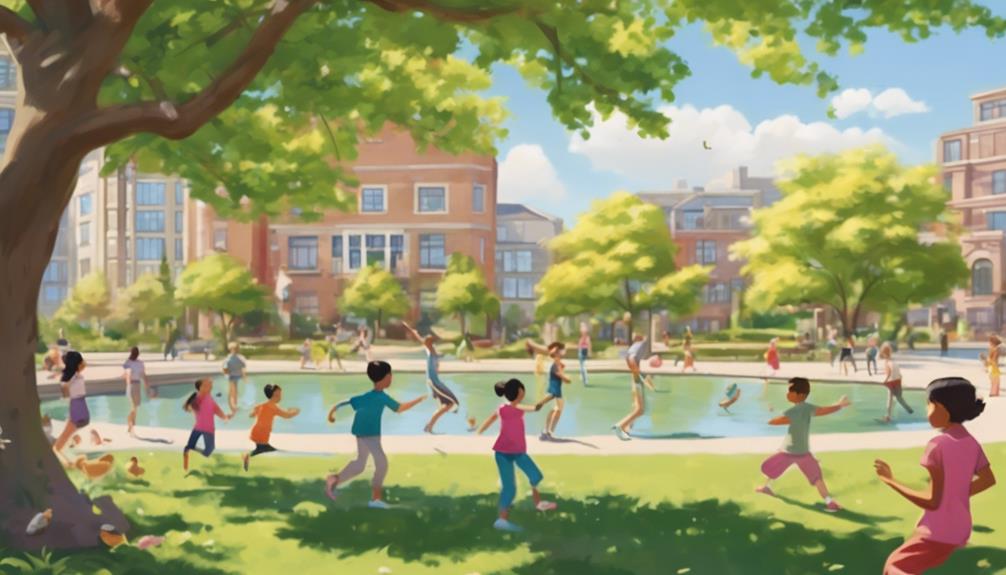
Public parks have a significant impact on community health, with benefits extending far beyond aesthetics. They offer green spaces that reduce stress levels and alleviate symptoms of anxiety and depression. Parks also provide ample opportunities for physical activity, improve air quality, and facilitate social connections. Moreover, they promote mental health, reduce the risk of heart disease, and encourage community engagement. Access to parks is particularly essential in underserved communities, promoting equity and social integration. By investing in parks, communities can reap economic benefits, too. As communities continue to grow, the importance of public parks in supporting overall health and well-being becomes increasingly evident.
Green Spaces Reduce Stress Levels
Research has consistently shown that spending time in green spaces greatly decreases cortisol levels, a hormone associated with stress, and alleviates symptoms of anxiety and depression. This is why many wellness retreats incorporate nature therapy into their programs, providing individuals with a serene environment to unwind and recharge. Public parks, in particular, offer a convenient and accessible way for community members to tap into the calming effects of nature.
A stroll through a park's walking trails or a sit-down in a quiet relaxation spot can work wonders for one's mental health. Mindfulness walks, where individuals focus on their breath and surroundings, can be particularly effective in reducing stress and anxiety. Simply being surrounded by trees, flowers, and wildlife can have a profound impact on one's mood and overall sense of well-being. Additionally, public parks often provide a sense of community, where individuals can connect with others who share similar interests and goals. This social aspect can further enrich the benefits of nature therapy, nurturing a sense of belonging and connection among community members. By incorporating green spaces into their daily routine, individuals can experience a significant decrease in stress levels and improve their overall mental health.
Physical Activity Opportunities Abound
Beyond the mental health benefits, public parks offer a wide range of opportunities for physical activity, making them an ideal destination for those looking to get moving and stay active. From walking and jogging trails to outdoor sports facilities, parks provide ample space for individuals to engage in their preferred form of exercise. Community gatherings and family picnics often involve outdoor games and activities, further encouraging physical activity among park-goers.
Many parks also offer group exercise classes, such as yoga or Zumba, which nurture a sense of community and social connection among participants. Additionally, outdoor sports like soccer, basketball, and tennis are commonly played in parks, promoting friendly competition and teamwork. These activities not just enhance physical health but also bring people together, helping to build stronger, more connected communities.
Public parks are particularly well-suited for families, providing a safe and accessible environment for children to engage in active play. Parents can supervise their kids as they ride their bikes, play tag, or climb on playground equipment, knowing they’re promoting healthy habits from a young age. By offering a diverse range of physical activity opportunities, public parks play a crucial role in supporting the overall health and well-being of community members. Additionally, families can enjoy picnics, nature walks, and community events that foster social connections and strengthen neighborhood bonds. Understanding public safety policies ensures that park visitors can fully enjoy these spaces while maintaining a secure and welcoming atmosphere for everyone. By staying informed about park rules and guidelines, families contribute to a safer environment where children can explore and play with confidence.
Air Quality Improvement Through Trees
Trees in public parks are nature's air purifiers, absorbing pollutants and releasing oxygen to create a healthier breathing environment for community members. By incorporating trees into urban planning, cities can mitigate the negative impacts of air pollution, which is a significant public health concern. Trees absorb pollutants like particulate matter, ozone, and nitrogen dioxide, reducing the amount of harmful substances in the air. This natural process enhances air quality and supports carbon sequestration, a critical component in the fight against climate change.
The significance of trees in public parks cannot be overstated. They provide a natural barrier against pollution, creating a safe haven for community members to recreate and socialize. In fact, studies have shown that areas with high tree density have lower levels of air pollution, leading to improved respiratory health and reduced mortality rates. Additionally, trees in public parks can also help to reduce the urban heat island effect, making cities more livable and comfortable for residents.
Social Connections Fostered Naturally
Public parks naturally facilitate social connections among community members by providing welcoming spaces for people to gather, interact, and build relationships. These shared public areas offer a neutral ground where individuals from diverse backgrounds can come together, nurturing a sense of community and belonging. Parks provide bonding opportunities through various activities, such as picnics, outdoor games, and cultural events, which encourage people to engage with one another. Social gatherings in parks often lead to meaningful conversations, helping to break down social barriers and build trust among community members.
Regularly visiting a local park can lead to chance encounters with neighbors, acquaintances, and even strangers, gradually turning them into friends. Park benches, playgrounds, and walking trails become informal gathering spots, facilitating spontaneous social interactions. Furthermore, parks often host community events, such as farmers' markets, concerts, and festivals, which attract people from all walks of life. These events offer a platform for socializing, networking, and making new connections. By providing these opportunities, public parks play an essential role in strengthening community bonds and promoting a sense of togetherness. As community members interact and connect with one another, they begin to feel a deeper sense of belonging, ultimately contributing to a more cohesive and supportive community.
Mental Health Benefits of Nature
Spending time outdoors in natural surroundings, facilitated by public parks, has a profound impact on individuals' mental well-being, as it reduces stress levels and alleviates symptoms of anxiety and depression. Research has consistently shown that nature therapy is an effective tool in promoting mental health, and public parks provide the perfect setting for this. By incorporating outdoor spaces into their daily routine, individuals can reap the benefits of nature's calming effects, leading to improved mood and reduced feelings of anxiety.
Outdoor mindfulness practices, such as meditation and yoga, can be particularly effective in promoting relaxation and reducing stress. Public parks offer a serene atmosphere, allowing individuals to disconnect from the busyness of daily life and reconnect with nature. This, in turn, nurtures a sense of calm and tranquility, crucial for maintaining good mental health. Additionally, the social aspect of public parks cannot be overstated. Interacting with others in a natural setting can help individuals build connections and a sense of community, further enhancing mental well-being.
In essence, public parks provide a unique opportunity for individuals to prioritize their mental health. By incorporating nature therapy and outdoor mindfulness practices into their daily routine, individuals can experience a significant improvement in their overall mental well-being. As a result, public parks play an important role in promoting a healthier, happier community. By recognizing the mental health benefits of nature, individuals can take the first step towards a more balanced and fulfilling life.
Obesity Rates Decrease Near Parks
Research has consistently shown that living near public parks is associated with lower obesity rates. This is likely because parks provide opportunities for physical activity, such as walking, jogging, or playing sports, which can help individuals burn calories and maintain a healthy weight. Parks often host farmers' markets or food festivals that promote healthier food options, further contributing to a decrease in obesity rates.
Physical Activity Increases
Living close to a park encourages residents to participate in consistent physical activity, which in turn leads to a significant decrease in obesity rates. This is due to parks offering a variety of opportunities for individuals to stay active, ranging from outdoor yoga sessions to team sports such as soccer and basketball. With park features such as walking paths, playgrounds, and recreational facilities, there's always something to engage in, no matter the individual's age or fitness level. Consequently, individuals living near parks tend to be more physically active, which directly impacts their overall well-being. Regular physical activity assists in burning calories, developing muscle, and increasing metabolism, all of which can aid in lowering the risk of obesity. By providing a convenient and accessible area for physical activity, parks play an essential role in encouraging healthy lifestyles and decreasing obesity rates in the neighborhood. By integrating physical activity into their daily schedule, residents can enjoy the advantages of a healthier, more joyful life.
Healthier Food Options
Proximity to parks moreover influences residents' eating habits, as they're more likely to opt for healthier food options from local vendors or community-supported agriculture programs that often operate within or near these green spaces. This increased access to healthy dining options contributes to a decrease in obesity rates in communities surrounding parks. When residents have easy access to nutritious choices, they're more likely to make informed decisions about their diet.
- Fresh produce stands and farmers' markets become a staple in park-adjacent neighborhoods, offering fresh fruits and vegetables to residents.
- Community gardens and urban agriculture projects sprout up, providing residents with the opportunity to grow their own healthy food.
- Local entrepreneurs open healthy cafes and restaurants near parks, catering to the demand for nutritious meals.
- Park-based programs and events promote healthy eating habits, educating residents on the importance of a balanced diet.
Heart Disease Risk Reduction Found
By participating in regular physical exercise in public parks, individuals can greatly decrease their risk of heart disease, a major public health concern. Heart health is significantly enhanced through physical exercise, which can lower blood pressure, enhance circulation, and strengthen the heart. In fact, regular physical exercise can decrease the risk of heart disease by up to 35%. This is particularly crucial for communities that lack access to gyms or other exercise facilities, as public parks offer a free and accessible space for physical activity.
Disease prevention is a crucial aspect of public health, and public parks play a crucial role in this endeavor. By providing a safe and welcoming space for physical activity, parks encourage individuals to take charge of their health and make positive lifestyle changes. Regular physical exercise can also decrease the risk of other chronic diseases, such as diabetes and some cancers. Moreover, physical exercise in public parks can have a ripple effect, inspiring others to make healthy lifestyle choices and contributing to a culture of wellness in the community. By promoting physical exercise and disease prevention, public parks are a valuable asset for community health and well-being.
Community Engagement Through Events
Public parks also support community engagement through events, which bring people together and improve social connections, a key factor in overall well-being. These events nurture a sense of community and belonging, encouraging residents to get involved and take pride in their neighborhood. Effective event planning is essential in creating a welcoming atmosphere that appeals to diverse age groups and interests.
By hosting a variety of events, parks can cater to different segments of the community, making sure everyone feels included. For example:
- Outdoor movie nights that draw families with young children
- Fitness classes and sport tournaments that involve teenagers and young adults
- Gardening workshops and art exhibitions that attract seniors and retirees
- Cultural festivals and concerts that celebrate diversity and unite everyone
Community involvement is important in the planning and execution of these events. Parks can collaborate with local organizations, businesses, and residents to ensure events are customized to the community's needs and preferences. This collaborative approach not only supports community engagement but also promotes social responsibility and ownership. By investing time and effort in event planning, parks can create a lively and inclusive environment that encourages social connections, community spirit, and a sense of belonging.
Access to Parks Increases Equity
Parks situated in underserved communities provide recreational opportunities to residents who need them most, bridging the gap in access to green spaces and promoting fairness. By offering equal entry to parks, communities can nurture a sense of belonging among all residents, irrespective of economic status or racial background. This, in turn, encourages social integration, breaking down barriers and stimulating interaction among diverse groups.
Entry to parks is essential for community well-being, as it offers a platform for physical activity, socializing, and relaxation. When parks are easily reachable, residents are more likely to participate in outdoor activities, leading to enhanced physical and mental health results. Additionally, parks act as community centers, hosting events and programs that bring people together and cultivate a sense of community. By advocating for access fairness, parks can help decrease health differences and enhance overall community well-being.
Fairness promotion is at the core of park development in underserved neighborhoods. By investing in park infrastructure and programming, cities can demonstrate their dedication to the well-being of all residents, regardless of postal code or income level. As a result, parks become symbols of community pride, nurturing a sense of ownership and accountability among residents. By prioritizing park access, cities can take a significant step towards promoting fairness, social integration, and community well-being.
Economic Benefits of Park Investment
Investing in park infrastructure and programming yields significant economic benefits, from increased property values and local business revenue to cost savings on healthcare and infrastructure maintenance. By doing so, communities can reap a multitude of rewards that benefit both residents and local businesses.
Some of the key economic benefits of park investment include:
- Job creation: Parks create jobs in maintenance, programming, and management, contributing to the local economy and providing opportunities for community members.
- Local economy boost: Parks attract visitors, supporting local businesses and stimulating revenue generation through increased foot traffic and tourism.
- Increased property values: Proximity to well-maintained parks increases property values, making neighborhoods more desirable and attracting new residents.
- Cost savings: Parks provide a natural infrastructure that can reduce the need for costly stormwater management systems and other infrastructure, saving communities money in the long run.
Frequently Asked Questions
Can Parks Be Designed to Accommodate People With Disabilities?
She believes that parks can be designed to accommodate people with disabilities. Inclusive design elements, such as wheelchair-accessible pathways and adaptive playground equipment, can create a welcoming environment. Moreover, accessibility programs, like sensory-friendly hours or sign language interpretation, can further promote inclusivity. By incorporating these features, parks can become spaces where everyone feels a sense of belonging, regardless of their abilities.
How Much Does It Cost to Maintain a Public Park Annually?
She wonders how much it costs to maintain a public park annually. The answer varies widely, but on average, it's around $1 million per year. Funding typically comes from a mix of government grants, private donations, and local taxes. Notwithstanding the expense, parks provide significant community benefits, boosting local economies and increasing property values. It's a worthwhile investment, considering the positive impact on residents' quality of life.
Do Parks Attract Crime or Reduce Neighborhood Safety Concerns?
Do parks really turn into crime hotspots, or are they safe havens? Surprisingly, the truth lies somewhere in between. Although it's true that parks can attract shady characters, they provide a unique opportunity for crime prevention. By offering a shared community space, parks bring people together, nurturing a sense of belonging and prompting neighbors to watch out for each other, ultimately diminishing safety concerns.
Can Public Parks Be Used for Environmental Education and Research?
Public parks offer a unique opportunity for environmental education and research. They provide a hands-on setting for scientific exploration, nurturing a sense of environmental stewardship among visitors. By integrating educational programs and research initiatives, parks can inspire community members to take an active role in conservation efforts. This collaboration promotes a sense of belonging among park-goers, as they work together to protect and preserve their local environment.
Are There Grants Available for Park Development and Renovation Projects?
Did you know that every dollar invested in parks returns nearly $3 in benefits? Fortunately, there are grants available for park development and renovation projects. The National Recreation and Park Association offers funding opportunities for accessibility improvements, community engagement initiatives, and economic benefits-driven projects. Local governments and non-profits can apply for these grants to revitalize their parks, promote community connection, and boost local economies.