

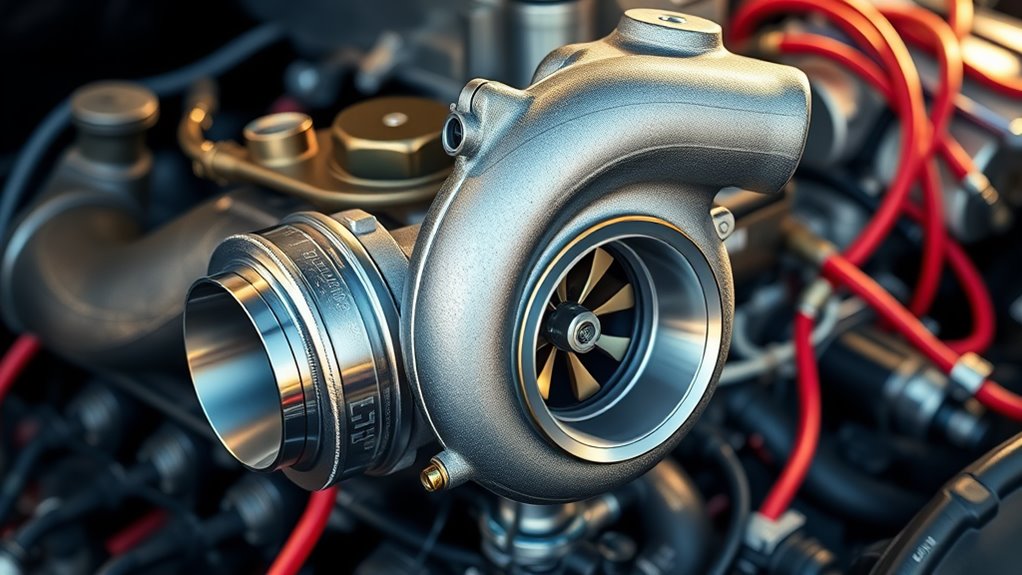
Turbocharging plays an essential role in boosting engine performance by forcing extra air into the combustion chamber. This process increases horsepower and torque, allowing smaller engines to outperform larger naturally aspirated ones. With improved air-fuel mixtures, turbocharged engines use fuel more efficiently, resulting in quicker acceleration and better overall responsiveness. Plus, they often weigh less, enhancing vehicle handling. If you explore further, you'll uncover more about the various types of turbochargers and their impact on modern vehicles.
Understanding Turbocharging: The Basics
When you think about enhancing engine performance, turbocharging often comes to mind as a powerful solution. This technology has a rich turbocharger history, dating back to the early 20th century when engineers first sought ways to improve engine efficiency. You'll find various turbocharger types today, each designed to fit different needs and preferences. From single-scroll turbochargers that offer simplicity and reliability to twin-scroll systems that optimize airflow for better performance, there's a turbo option for every enthusiast.
A turbocharger boosts engine capability by forcing in extra air, enabling combustion of more fuel. This means you can enjoy thrilling acceleration and improved fuel efficiency without sacrificing freedom on the road. Whether you're looking to upgrade your daily driver or build a performance monster, grasping these basics of turbocharging can enhance your choices. So, explore the realm of turbocharging and release the potential of your engine!
How Turbochargers Work: A Technical Overview
Turbochargers function by utilizing the exhaust gases produced during engine operation. This clever mechanism transforms wasted energy into free horsepower, giving you more strength without the need for a larger engine. Here's how it works:
- Exhaust Gases: The turbocharger takes in the hot exhaust gases from the engine.
- Impellers: These gases spin the turbine, which is connected to a compressor on the other side.
- Boost Pressure: The compressor draws in ambient air, compressing it to create boost pressure, which forces more air into the engine's cylinders.
Advantages of Turbocharging for Engine Performance
Though many car enthusiasts appreciate the thrill of high horsepower, turbocharging offers significant advantages beyond just raw strength. When you opt for a turbocharger, you reveal a world of performance enhancements that can uplift your driving experience.
| Turbocharger Advantages | Performance Enhancements | Overall Benefits |
|---|---|---|
| Increased Force | Quicker Acceleration | Improved Driving Experience |
| Improved Responsiveness | Greater Torque | Versatile Engine Performance |
| Lightweight Design | Better Handling | Smoother Rides |
With a turbocharger, you're not just getting more force; you're getting a responsive engine that adapts to your needs. Whether you're maneuvering city streets or tearing up the highway, the boost from a turbocharger transforms your ride. You'll feel the difference in every turn and straightaway, making your driving experience not just about speed, but also about exhilaration and control. So, embrace the freedom that turbocharging brings!
The Impact of Turbocharging on Fuel Efficiency
Turbocharging can greatly boost your car's fuel efficiency by improving the air-fuel mixture and enhancing combustion efficiency. With reduced engine load, you'll find that your vehicle can perform better during less fuel usage. This means you can enjoy both strength and savings at the pump.
Improved Air-Fuel Mixture
Many drivers might not realize how turbocharging improves fuel efficiency by optimizing the air-fuel mixture in an engine. By enhancing airflow optimization, turbochargers allow for a more precise balance of air and fuel, leading to better combustion. Here's how it works:
- Enhanced Performance: Turbocharging forces more air into the engine, ensuring a richer mixture for combustion.
- Improved Efficiency: With better mixture tuning, you get more energy from less fuel, allowing for longer drives without frequent stops.
- Lower Emissions: A well-optimized air-fuel mixture burns cleaner, reducing your carbon footprint.
Embrace the freedom of the road during enjoying the benefits of turbocharging. It's all about getting more from every drop of fuel you use!
Reduced Engine Load
Reducing engine load is a key benefit of turbocharging that directly impacts fuel efficiency. By allowing for engine downsizing, turbochargers let you enjoy robust performance without the weight and drag of a larger engine. This means you can experience better acceleration and responsiveness as you use less fuel. With a turbocharger, you optimize performance, making your drive more exhilarating without sacrificing efficiency. You get the freedom to enjoy spirited driving and long trips, knowing your engine's load is reduced, translating to lower fuel consumption. Embracing turbocharging not only improves your vehicle's capabilities but also aligns with your desire for responsible fuel usage. It's a win-win for performance enthusiasts who value efficiency and freedom on the road.
Enhanced Combustion Efficiency
Although you might think that bigger engines always mean better performance, turbocharging proves that improving combustion efficiency can deliver energy with less fuel. By optimizing combustion dynamics, turbochargers enhance the air-fuel mixture, leading to better fuel atomization. This means you get more strength without guzzling gas, freeing you to enjoy the open road.
Here are three ways turbocharging boosts fuel efficiency:
- Increased Air Intake: Turbochargers compress more air, allowing for a richer fuel mix.
- Improved Combustion: Enhanced combustion dynamics guarantee more complete fuel burn.
- Lower Emissions: Efficient fuel usage translates to fewer harmful emissions.
Embrace the strength of turbocharging, and let your engine perform like never before!
Turbocharging vs. Naturally Aspirated Engines
When you compare turbocharged engines to naturally aspirated ones, you'll notice significant differences in force output and fuel efficiency. Turbocharging can boost force without increasing engine size, whereas naturally aspirated engines rely solely on atmospheric pressure. Comprehending these distinctions can help you make informed choices about performance and efficiency in your vehicle.
Power Output Comparison
Energy output is a critical factor in engine performance, and the comparison between turbocharged and naturally aspirated engines reveals significant differences. When you consider energy output, turbocharged engines often deliver more punch for less displacement. Here are three key points in the performance comparison:
- Increased Energy: Turbocharged engines can produce greater horsepower and torque than their naturally aspirated counterparts.
- Engine Size Efficiency: Smaller turbocharged engines can outperform larger, naturally aspirated ones, providing a more agile driving experience.
- Boost on Demand: Turbochargers amplify energy output without sacrificing vehicle weight, giving you that freedom on the road.
Choosing the right engine type can raise your driving experience, releasing the full potential of your vehicle.
Fuel Efficiency Differences
Even though you might think strength and performance are the only factors to take into account in engine choice, fuel efficiency plays a crucial role as well. Turbocharged engines often deliver better fuel consumption, allowing you to enjoy spirited driving without constantly worrying about gas prices. Naturally aspirated engines, though simpler, typically come with performance trade-offs, sacrificing some efficiency for that straightforward energy delivery.
| Engine Type | Fuel Consumption | Performance Trade-offs |
|---|---|---|
| Turbocharged Engine | Lower | Higher complexity |
| Naturally Aspirated | Higher | Simplicity and reliability |
Choosing between these engines means balancing your need for performance with your desire for fuel efficiency. Embrace the freedom of driving smartly during the ride!
The Role of Turbochargers in Modern Vehicles
Turbochargers play a crucial role in enhancing the performance of modern vehicles, allowing you to experience a strong drive without sacrificing fuel efficiency. With their ability to maximize energy output as well as minimizing fuel consumption, they're perfect for those who crave freedom on the open road. Here are three turbocharger benefits that boost your vehicle performance:
- Increased Energy: Turbochargers compress air entering the engine, providing more oxygen for combustion, which results in greater horsepower.
- Better Fuel Efficiency: By optimizing engine output, turbochargers help you save on fuel, allowing for longer drives without frequent stops.
- Lower Emissions: More efficient fuel combustion means fewer emissions, making your ride not only powerful but also environmentally friendly.
Embracing turbocharger technology in modern vehicles means you can enjoy an exhilarating driving experience as well as being kind to your wallet and the planet.
Common Myths About Turbocharging Debunked
Many drivers are excited about the benefits turbochargers offer, but misconceptions about their operation and performance can cloud judgment. One common myth is that turbochargers are only for high-performance vehicles. In reality, they can improve any engine's efficiency, giving you that extra kick without sacrificing fuel economy.
Another turbocharging misconception is that turbos are unreliable and require constant maintenance. Although they do need care, modern designs are built for durability and reliability, making them a smart choice for daily drivers.
Some believe that turbo lag is a significant issue, but advancements in technology have minimized this effect, ensuring quicker throttle response. Finally, many think that adding a turbo will drastically increase engine wear, but with proper tuning and care, your engine can thrive. Embracing turbocharging means revealing potential, not falling for turbocharger myths that limit your driving freedom.
Turbocharger Types: Which One Is Right for You?
When choosing a turbocharger, it's crucial to take into account the design variations that align with your performance needs. Different types offer unique benefits, so comprehending what you want from your engine can help you make the right choice. Let's explore how to evaluate your performance goals and find the perfect turbocharger for your setup.
Turbocharger Design Variations
Choosing the right turbocharger can greatly impact your engine's performance, especially since various designs cater to different needs and preferences. Here are three key factors to evaluate:
- Turbocharger Materials: Lightweight materials can improve performance and efficiency, reducing lag and enhancing responsiveness.
- Compressor Sizing: The right compressor size guarantees you get the boost you need without sacrificing drivability.
- Design Variations: Options like twin-scroll or variable geometry can provide unique benefits, tailoring the boost to your driving style.
Each design has its advantages, so explore what's out there to find the perfect match for your ride. Embrace the freedom to customize your performance and raise your driving experience!
Performance Needs Assessment
Determining the right turbocharger for your engine hinges on comprehending your specific performance needs. Start with a thorough performance evaluation to identify how you want your vehicle to perform—whether it's for daily driving, racing, or off-roading. Consider your user requirements, like desired horsepower, torque, and response time. A smaller turbo may boost responsiveness, whereas a larger one can considerably increase overall capacity.
Evaluate your engine's compatibility with different turbocharger types, such as single, twin-scroll, or sequential setups. Each has distinct advantages suited to various performance goals. By aligning your turbo choice with your unique needs, you'll release the freedom to enjoy a driving experience customized just for you.
Maintenance Tips for Turbocharged Engines
To keep your turbocharged engine running smoothly, regular maintenance is vital. Neglecting it can lead to performance issues and reduced boost pressure. Here are three fundamental tips to maintain your engine and enjoy the freedom of the open road:
- Frequent Oil Changes: Turbo engines operate at higher temperatures, so change your oil regularly to keep it clean and effective. This helps prevent wear and tear on engine components.
- Monitor Boost Pressure: Keep an eye on your boost pressure gauge. If you notice any fluctuations, it could indicate issues with your turbocharger or related systems that need addressing.
- Inspect Air Filters: A clean air filter guarantees peak airflow to your engine. Regularly check and replace it to maintain efficiency and performance.
Future Trends in Turbocharging Technology
As you keep your turbocharged engine in top shape, it's exciting to look ahead at the innovations shaping turbocharging technology. One of the most thrilling trends is electric turbocharging. This technology eliminates turbo lag, giving you instant energy when you need it. Envision accelerating without waiting for your turbo to spool up—it's a revolutionary shift for performance enthusiasts like you.
Future innovations further include integrating turbocharging with hybrid systems, enhancing fuel efficiency as well as maximizing energy output. You'll see more manufacturers embracing this approach, allowing for greater freedom in how you drive. Moreover, advanced materials and designs are on the horizon, making turbos lighter and more durable.
These developments promise to push the boundaries of what your engine can do. So, as you focus on maintaining your turbocharged engine, keep an eye on these exciting trends that will redefine your driving experience.
Real-World Applications of Turbocharging in Motorsports
Turbocharging has become a game-changer in the domain of motorsports, where every fraction of a second counts. By utilizing turbo boost, racers unleash incredible strength and efficiency, pushing their machines to the limit. Here are some real-world applications of turbocharging in motorsports that fuel the thrill:
- Formula 1: Turbocharged engines dominate the circuit, offering astounding acceleration and speed.
- Rally Racing: In challenging terrains, turbocharged racing vehicles provide the necessary torque to conquer hills and sharp turns.
- Drag Racing: Turbo boost allows for explosive starts, turning mere seconds into victories.
With turbocharging, you're not just accelerating; you're embracing the freedom to push boundaries and redefine performance. Whether you're a driver or a fan, the excitement of turbocharged racing is unmatched, proving that in motorsports, the right boost can make all the difference.
Frequently Asked Questions
Can Turbocharging Increase Engine Lifespan?
Turbocharging can potentially increase engine lifespan by enhancing engine durability. When you boost performance, you often run the engine more efficiently, which can lead to less wear over time. Nevertheless, it's vital to follow proper maintenance practices, like regular oil changes and monitoring temperatures. By keeping your engine in top shape, you can enjoy the freedom of a strong ride without sacrificing longevity. So, embrace turbocharging, but don't skip on maintenance!
How Does Turbocharging Affect Vehicle Insurance Rates?
When you think of turbocharging, you might envision high performance and thrilling speed, but it can likewise impact your turbo insurance rates. Insurers often consider performance factors like increased horsepower and potential repair costs. If you're driving a turbocharged vehicle, you may face higher premiums because of these added risks. Balancing the thrill of speed with the cost of coverage can feel limiting, but comprehending these factors helps you make informed decisions about your freedom on the road.
Are Turbocharged Engines More Prone to Overheating?
Yes, turbocharged engines can be more prone to overheating. When you push a turbocharger hard, it generates increased heat, which can stress your engine's cooling system. If your engine cooling isn't up to par, you might face overheating issues. To avoid this, make sure you maintain your cooling system and monitor temperatures. By staying proactive, you can enjoy the strength of a turbocharged engine without the worry of overheating ruining your drive.
What Modifications Are Needed for Turbocharging Older Vehicles?
To turbocharge older vehicles, you'll need to verify engine compatibility first. This often involves upgrading the fuel system, exhaust, and intercooler for better airflow. Don't forget performance tuning; adjusting the ECU settings is essential to optimize energy output and prevent engine damage. You might additionally need stronger internals, like pistons and rods, to handle the increased stress. With these modifications, you can release your vehicle's potential and enjoy a thrilling ride!
Can Turbochargers Be Added to Hybrid Engines?
Yes, you can add turbochargers to hybrid engines, but you'll need to evaluate turbocharger compatibility first. Many hybrids benefit from improved strength without sacrificing hybrid efficiency. By integrating a turbocharger, you can improve acceleration and overall performance during still enjoying the benefits of electric strength. Just make sure your hybrid's engine can handle the added boost and that the system is optimized for the best results. Freedom in performance is within reach!